01
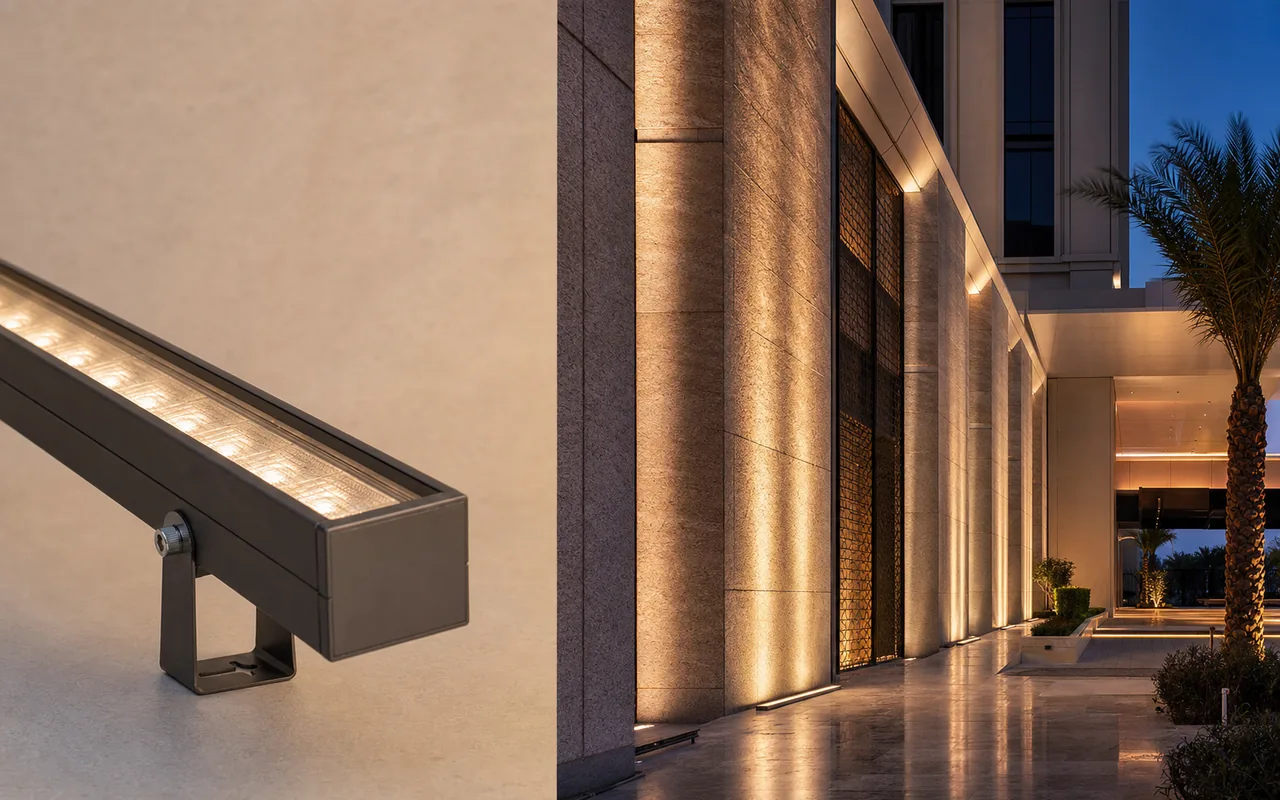
Elevation, grazing and outline
Facade & Linear Lighting
Define the surface, mounting position, setback, beam control and control intent before comparing facade or linear lighting candidates.
- Facade washing
- Wall grazing
- Architectural outlines

Outdoor / application-first review
Start with the site, climate exposure, installation and approval path. A candidate product becomes publishable evidence only after its model, partner and file scope are attached to the RFQ.
Capability or requirement is discussed at project level before any model, finish or document claim is published.
Outdoor family index
Six public family routes organise application inputs. They do not imply a reviewed model, project result or universal GCC suitability.
Elevation, grazing and outline
Define the surface, mounting position, setback, beam control and control intent before comparing facade or linear lighting candidates.
Open-area coverage and control
Start with the illuminated area, mounting geometry, spill-light limits and operating conditions before requesting a flood or area-light shortlist.
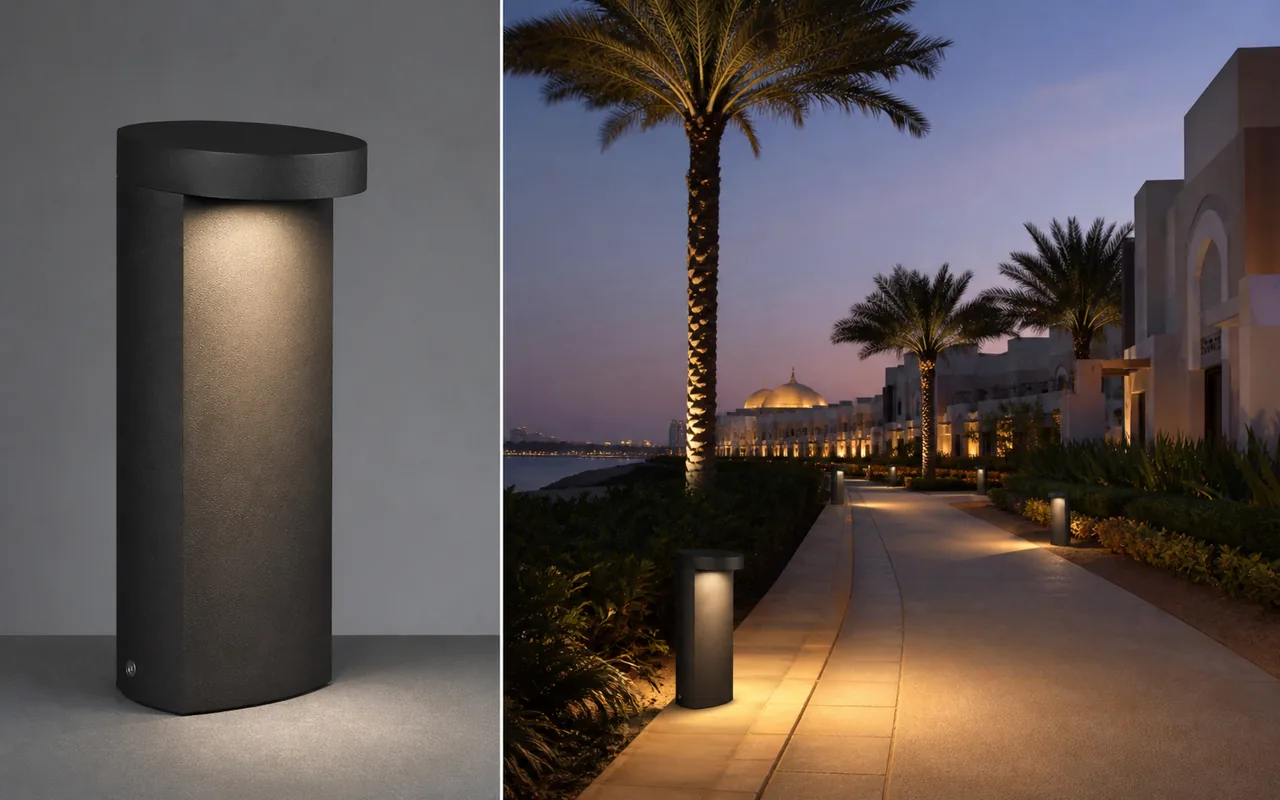
Paths, planting and boundaries
Coordinate pathway visibility, planting, glare, mounting and maintenance access before comparing garden, bollard or exterior wall-light candidates.
Integrated and wet-location details
Resolve recess, drainage, access, surface temperature and wet-location requirements before considering inground, step or underwater lighting candidates.
Road geometry and distribution
Set the road class, pole geometry, spacing, distribution, control and approval criteria before comparing street-light candidates.
Autonomous energy and operation
Define nightly load, autonomy, solar exposure, battery environment, mounting and control behaviour before comparing solar-lighting systems.
Application matrix
These are procurement entry points, not installed-project references or confirmed outdoor models.
Elevation, surface, mounting, setback, optics, controls and environmental exposure.
Site plan, paths, planting, glare limits, mounting and water, dust or coastal exposure.
Geometry, pole layout, approval class, photometric requirement, voltage and surge criteria.
Usage, maintenance access, installation, approval path and environmental conditions.
Arrival, terrace, pathway, garden and boundary zones coordinated with the indoor schedule.
GCC requirement gate
Heat, dust, coastal corrosion, ingress and surge needs are inputs to qualification. They are not automatic properties of an unnamed outdoor range.
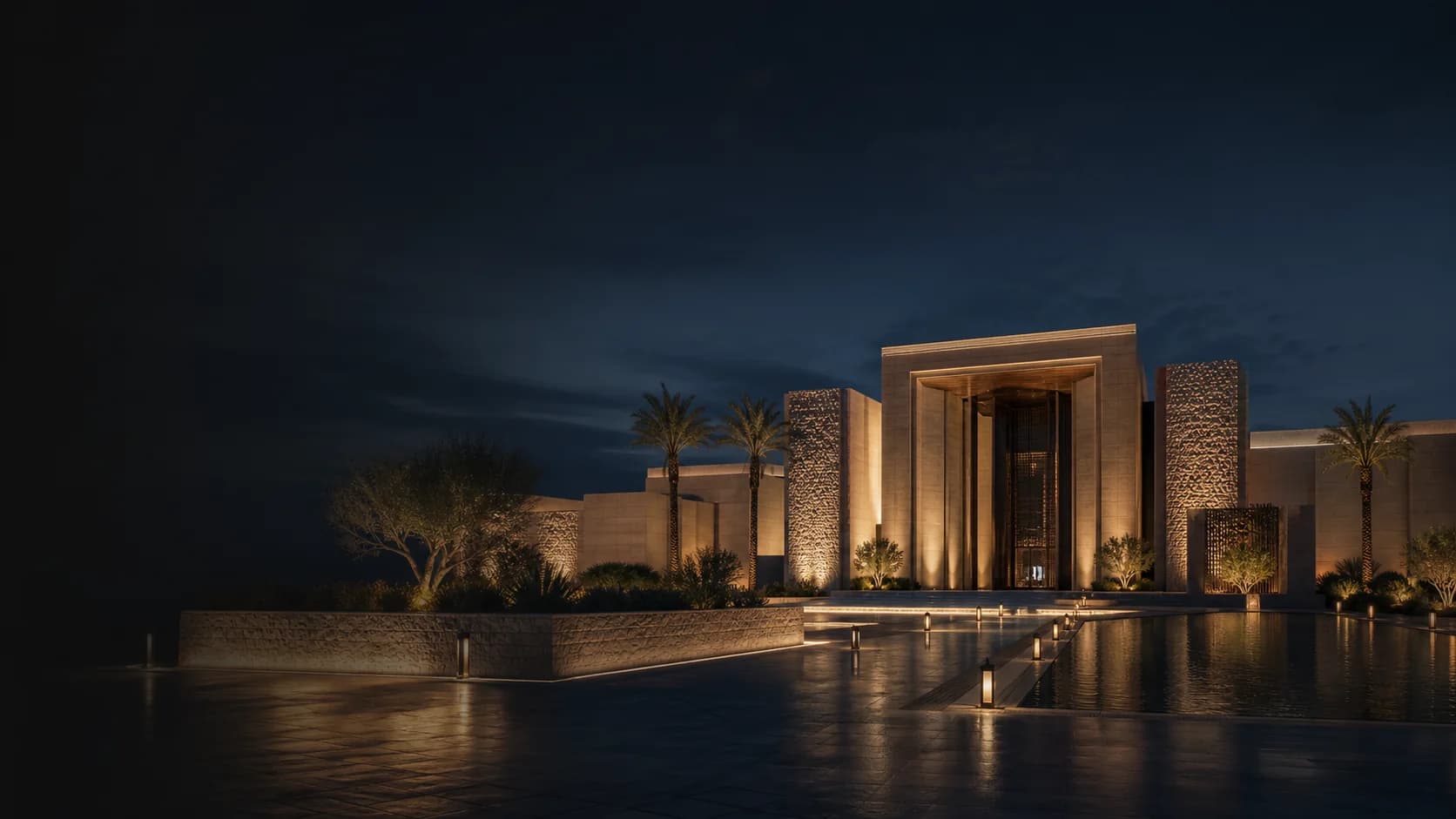
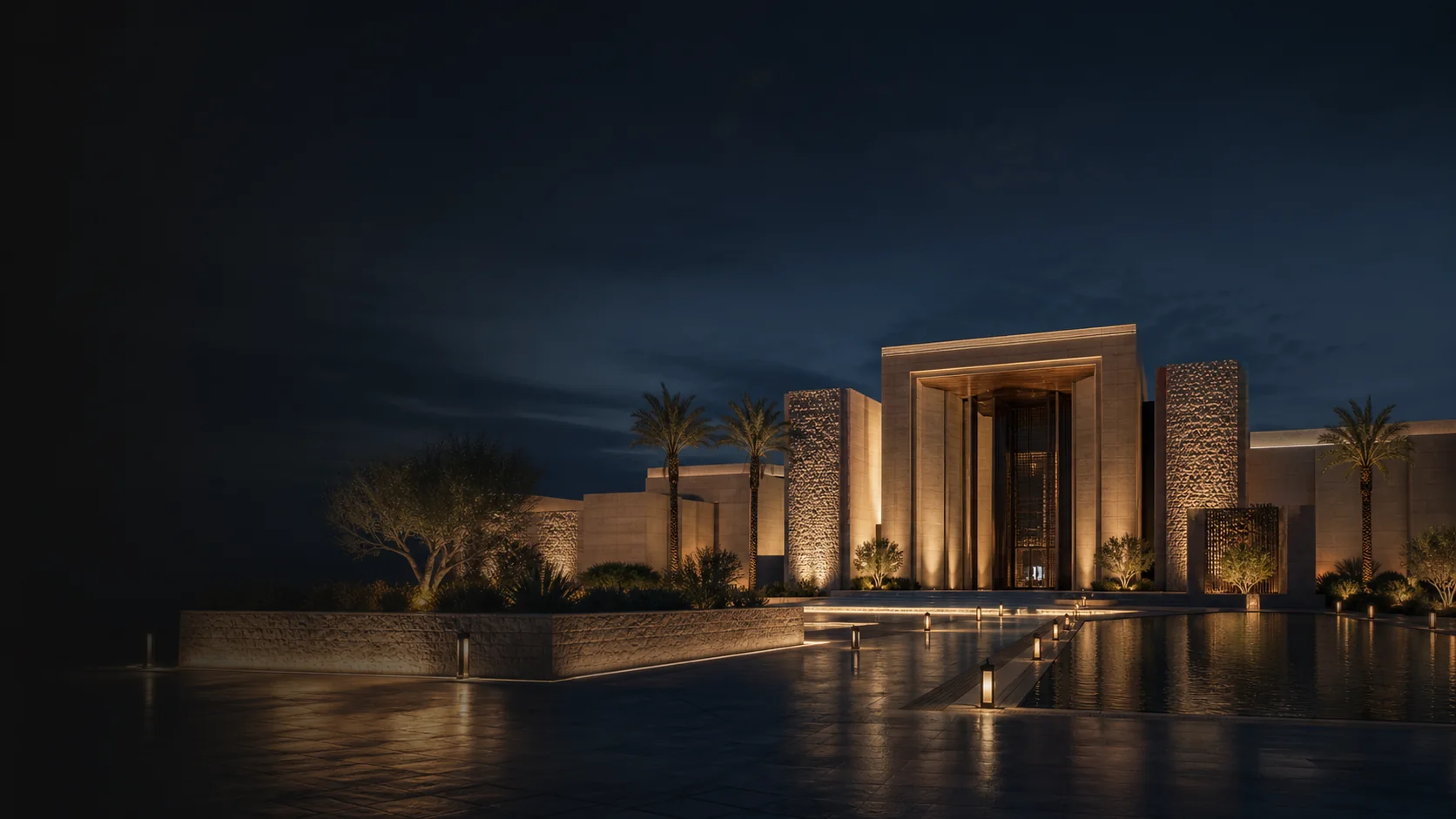
Concept references
Every image keeps its original concept label and boundary caption.
Evidence flow
A model is not recommended until the requirement and available evidence can be compared in the same scope.
Record site, task, mounting, environment, controls, quantities and approvals.
Name the candidate model and responsible manufacturing partner for comparison.
Match drawings, photometric data and available reports to the exact version.
Close visible gaps and record the version accepted for the confirmed order scope.
FAQ / evidence boundary
These answers separate public evidence from the configuration and file checks completed for a live project.
No. Suitability must be checked for the named model, actual ambient conditions, installation and evidence scope.
No. They are visibly labelled concepts and are not presented as delivered-project evidence.
Include the application, site plan, quantities, voltage, maximum ambient temperature, coastal exposure, mounting, optics, required files and delivery window.