Practical answer
Control whether, when, where and how much light operates
Begin by removing unnecessary light and defining the task for each zone. Set curfews, occupancy responses and the lowest verified operating level. Keep light within the intended area through shielding, aiming and appropriate distribution, and let the project ecologist determine sensitive species, seasons, spectra and monitoring needs. Coastal durability, controls and maintenance must support the environmental intent over the installation life.
Decision matrix
| Site condition | Specification response | Approval evidence |
|---|---|---|
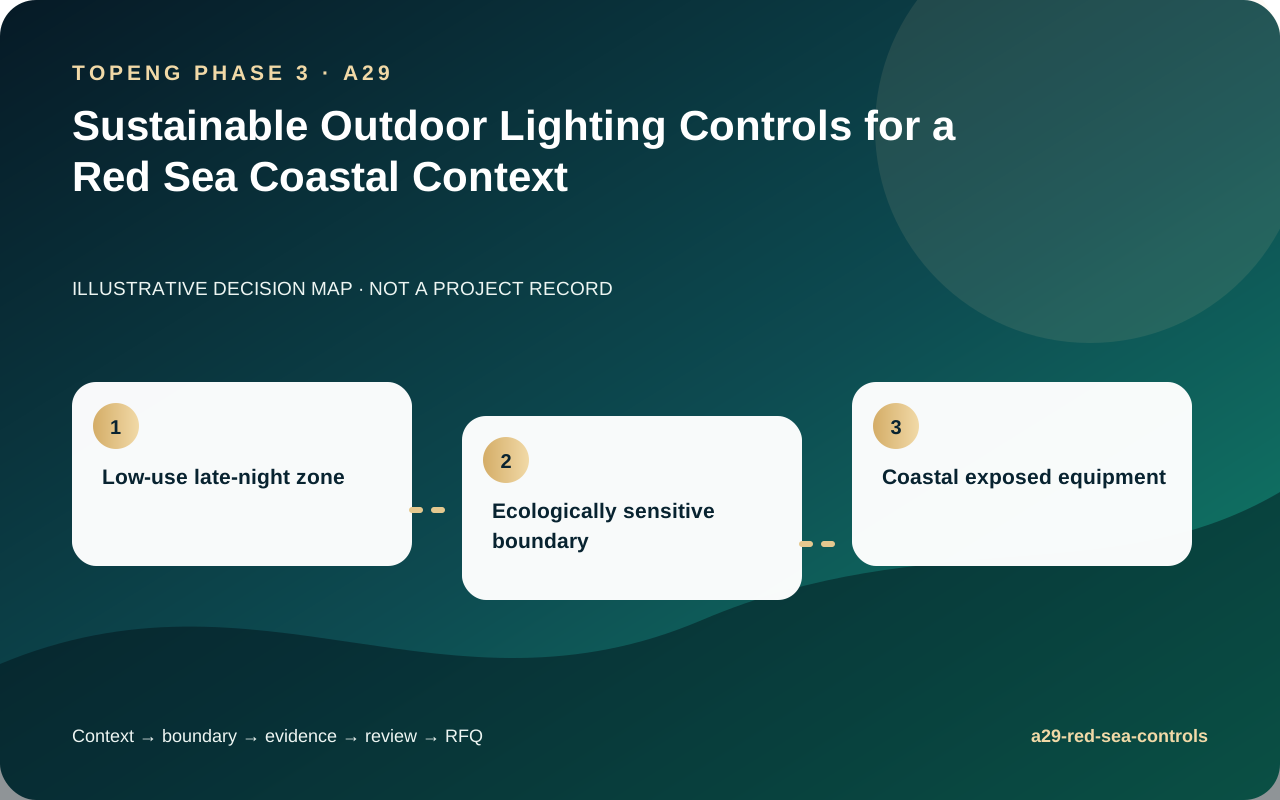
| Low-use late-night zone | Use curfew, occupancy response or off state with a safe and tested transition | Operating schedule, cause-and-effect test, logs and owner approval |
| Ecologically sensitive boundary | Avoid direct spill and source view; follow project-specific ecology advice on spectrum and timing | Ecology brief, viewpoint or boundary study, mock-up and monitoring method |
| Coastal exposed equipment | Choose maintainable materials, seals, drainage and controls that preserve aiming and output | Exposure schedule, material evidence, inspection plan and replacement strategy |
Selection and verification workflow
- Define the necessary human, operational and safety task for every zone.
- Map ecological receptors, observer views, operating seasons and dark boundaries.
- Set distribution, shielding, level, color and time controls with measurable criteria.
- Mock up representative boundaries and test dim, off, override and failure states.
- Commission aiming and scenes, then monitor, maintain and correct the installation.
Limits and responsibility boundaries
- A Red Sea context does not imply affiliation with or approval by any named development.
- No universal CCT or curfew substitutes for project-specific ecological assessment.
- Energy efficiency alone does not prove low spill, low glare or low ecological impact.
Evidence to request before approval
Treat a catalogue statement as a screening input, not final proof. Every supporting file should identify the same offered model, construction, optic, driver, finish and control configuration, with revision and test-scope details that the appointed team can review.
- Zone task and operating schedule including curfew, occupancy, override and failure behavior.
- Project ecological requirements, sensitive boundaries and monitoring responsibilities.
- Photometric files, aiming, shielding and boundary calculations using the offered configuration.
- Coastal material, finish, seal, drainage, access and maintenance evidence.
- Night commissioning record with measured settings, scene backup, observations and correction process.
RFQ input checklist
Comparable quotations need one controlled input schedule. Give every bidder the same geometry, environment, document scope, exclusions, acceptance route and commercial assumptions before price is compared.
- Country, city, project stage, application zones, quantities and target approval date.
- Exact mounting, voltage, CCT, optic, output, control protocol and environmental exposure.
- Required drawings, photometric files, material declarations, reports and certificate scope.
- Sample or mock-up method, acceptance owners, deviations, revision control and sign-off record.
- Packing, spares, delivery window, warranty responsibility and commissioning expectations.