Practical answer
Use a documented coordination path from requirement to shipment handover
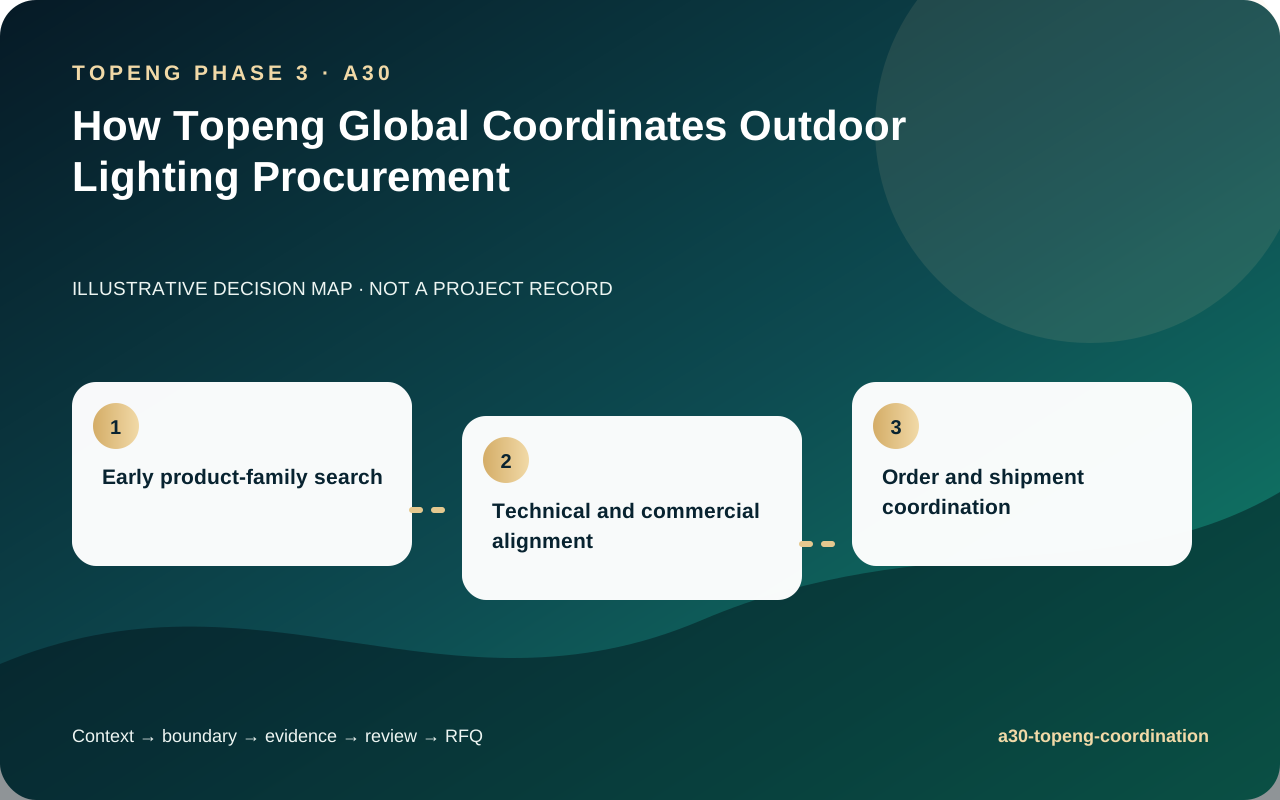
Topeng Global provides China-based engineering procurement and supply coordination for Middle East outdoor lighting requirements. The working path structures buyer inputs, compares product families, requests model-specific documents, coordinates samples and quotations, tracks approved configurations, and supports inspection, packing and shipment communication. Each offer should still identify the actual product manufacturer, evidence owner, commercial entity and warranty route.
Decision matrix
| Site condition | Specification response | Approval evidence |
|---|---|---|
| Early product-family search | Translate site, application and document needs into a comparable shortlist without final design approval | Buyer input record, shortlist rationale, open questions and model schedule |
| Technical and commercial alignment | Collect offered configuration, evidence, deviations, MOQ, lead time and terms in one revision-controlled pack | Comparison matrix, model documents, quotation revision and clarification log |
| Order and shipment coordination | Track approved items, changes, inspection, packing, spares, documents and logistics milestones | Purchase record, inspection release, packing list, document index and escalation contacts |
Selection and verification workflow
- Capture country, application, quantities, environment, interfaces and required evidence.
- Create a product-family shortlist and identify unanswered design or approval questions.
- Coordinate model-specific documents, samples, quotations, deviations and revisions.
- Freeze the accepted configuration and inspection plan before production release.
- Reconcile packing, shipment, documents, spares, warranty path and handover contacts.
Limits and responsibility boundaries
- The coordination role does not manufacture every offered item; each offer should name the actual responsible manufacturing entity.
- Topeng Global is not the appointed designer, consultant, contractor or authority unless a separate signed appointment explicitly says so.
- Certification and test-report scope must be verified against the offered model, holder, site and current document revision.
Evidence to request before approval
Treat a catalogue statement as a screening input, not final proof. Every supporting file should identify the same offered model, construction, optic, driver, finish and control configuration, with revision and test-scope details that the appointed team can review.
- Buyer requirement and responsibility matrix identifying appointed design and approval owners.
- Model-specific datasheet, drawing, photometric file and available report or certificate scope.
- Manufacturer, commercial entity, evidence holder, inspection and warranty mapping.
- Approved configuration, deviation, sample, revision and change-control record.
- Inspection, packing, spares, shipment document index and post-shipment escalation route.
RFQ input checklist
Comparable quotations need one controlled input schedule. Give every bidder the same geometry, environment, document scope, exclusions, acceptance route and commercial assumptions before price is compared.
- Country, city, project stage, application zones, quantities and target approval date.
- Exact mounting, voltage, CCT, optic, output, control protocol and environmental exposure.
- Required drawings, photometric files, material declarations, reports and certificate scope.
- Sample or mock-up method, acceptance owners, deviations, revision control and sign-off record.
- Packing, spares, delivery window, warranty responsibility and commissioning expectations.