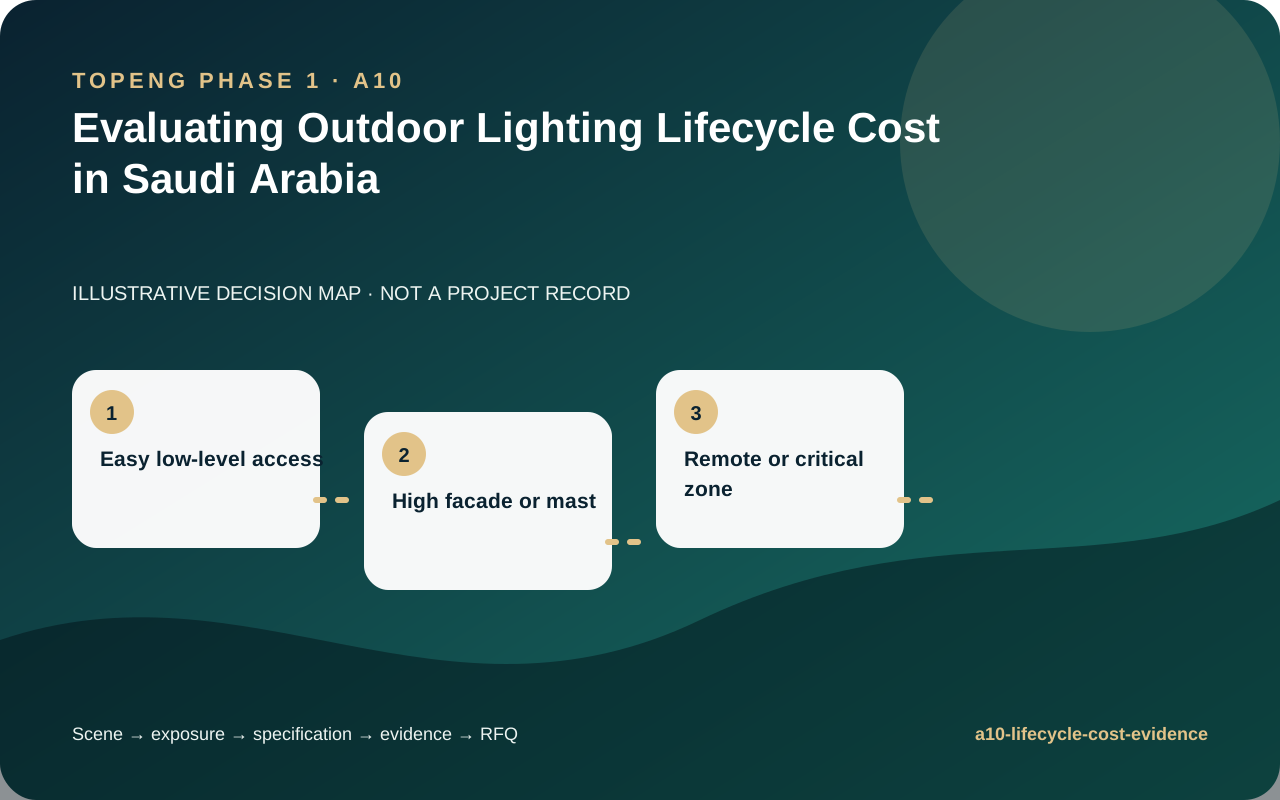
Practical answer
Model service events and evidence, not just energy and purchase price
Use the same operating hours, dimming profile, access method, cleaning interval, driver replacement assumptions, spare strategy and warranty exclusions for every option. Treat claimed life as one input whose test conditions and component limits must be reviewed.
Decision matrix
| Site condition | Specification response | Approval evidence |
|---|---|---|
| Easy low-level access | Compare planned cleaning and component replacement | Maintenance task time and parts list |
| High facade or mast | Include access equipment and disruption | Access method, isolation plan and service interval |
| Remote or critical zone | Increase diagnostic and spare-parts readiness | Fault data, replaceable modules and stock plan |
Selection and verification workflow
- Fix operating hours and control profile.
- List cleaning, inspection and replacement events.
- Price access, labor, equipment and disruption.
- Review warranty and component boundaries.
- Compare scenarios and sensitivity, not one headline number.
Limits and responsibility boundaries
- A rated-life value is not a guaranteed service date.
- Energy savings require an agreed baseline.
- Total cost varies with labor, access and operating policy.
Evidence to request before approval
Treat a model name or brochure statement as a starting point. The offered construction and the supporting file must refer to the same configuration.
- Power and dimming schedule.
- Driver and module replaceability.
- Thermal and lifetime assumptions.
- Cleaning and access task plan.
- Warranty exclusions and spare-parts availability.
RFQ input checklist
A comparable quotation needs the same site inputs, document scope and commercial assumptions from every bidder.
- Country, city, site plan, application zones and current project stage.
- Fixture quantities, mounting details, voltage, CCT, beam and control requirements.
- Heat, dust, salt, water, irrigation, public-access and maintenance exposure.
- Datasheet, photometric file, drawing, material, finish and test-evidence requirements.
- Sample, mock-up, packing, spare-parts, delivery and warranty expectations.