Practical answer
Start from darkness, sensitive receptors and operating need
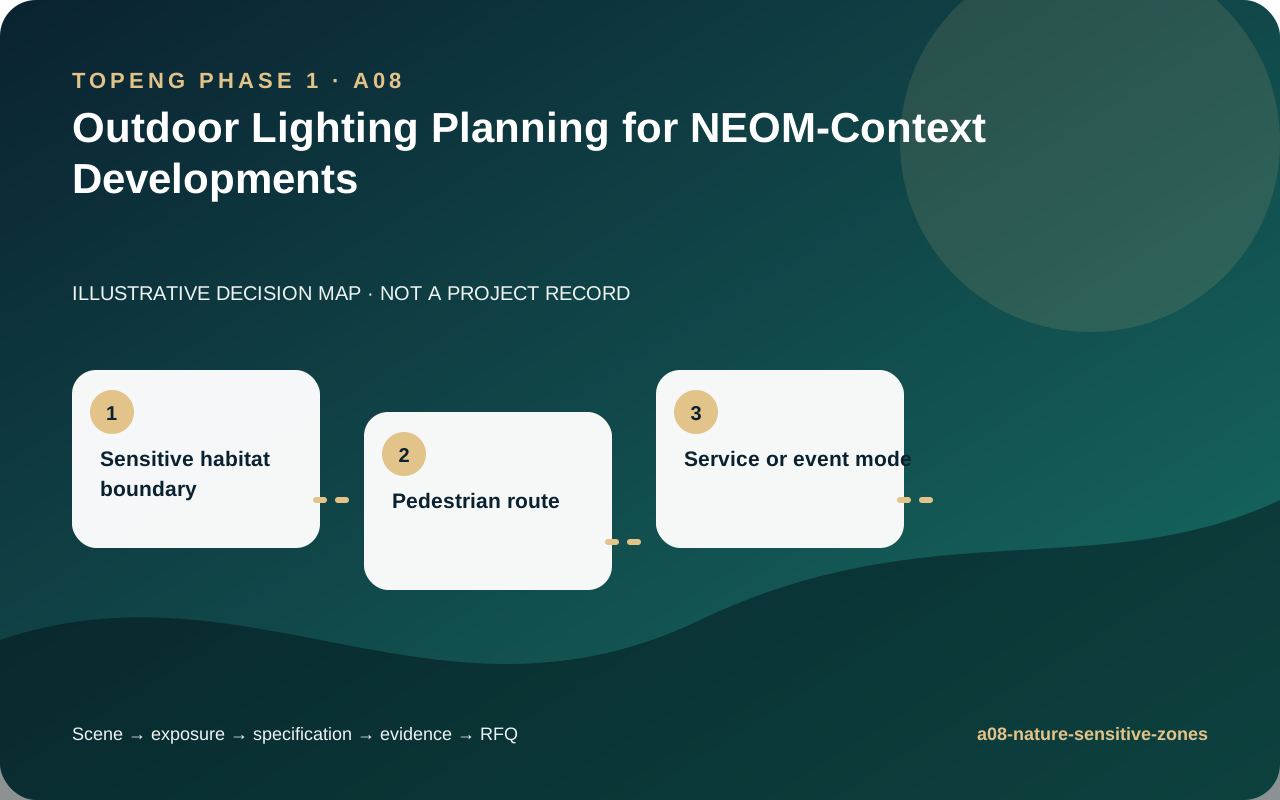
Map ecological and human receptors, define where light is necessary, set spatial, temporal and spectral limits, and ask the supplier to demonstrate distribution, shielding, dimming and construction evidence. Project-appointed environmental and lighting teams retain approval.
Decision matrix
| Site condition | Specification response | Approval evidence |
|---|---|---|
| Sensitive habitat boundary | Avoid unnecessary light and confine required output | Boundary calculation, shielding detail and curfew |
| Pedestrian route | Use the lowest effective level with controlled vertical recognition | Task calculation and observer glare views |
| Service or event mode | Separate temporary scene from normal operation | Scene schedule, permissions and rollback state |
Selection and verification workflow
- Identify sensitive receptors and darkness objectives.
- Challenge whether each light point is necessary.
- Set distribution, time and spectral limits.
- Verify controls and physical shielding.
- Measure and record the approved night condition.
Limits and responsibility boundaries
- This page is not a NEOM standard or approval.
- Illustrations are concepts, not project records.
- Environmental limits come from the appointed project team.
Evidence to request before approval
Treat a model name or brochure statement as a starting point. The offered construction and the supporting file must refer to the same configuration.
- Zoned lighting criteria.
- Photometric file and boundary calculation.
- Shielding and aiming detail.
- Dimming, curfew and fail-state schedule.
- Night measurement and approval record.
RFQ input checklist
A comparable quotation needs the same site inputs, document scope and commercial assumptions from every bidder.
- Country, city, site plan, application zones and current project stage.
- Fixture quantities, mounting details, voltage, CCT, beam and control requirements.
- Heat, dust, salt, water, irrigation, public-access and maintenance exposure.
- Datasheet, photometric file, drawing, material, finish and test-evidence requirements.
- Sample, mock-up, packing, spare-parts, delivery and warranty expectations.