Practical answer
Define control boundaries, data ownership and failure behavior before choosing devices
A connected luminaire is only one layer. State who owns field devices, gateways, networks, credentials, data, dashboards, updates and incident response; then define what remains illuminated if communications fail and what evidence proves interoperability.
Decision matrix
| Site condition | Specification response | Approval evidence |
|---|---|---|
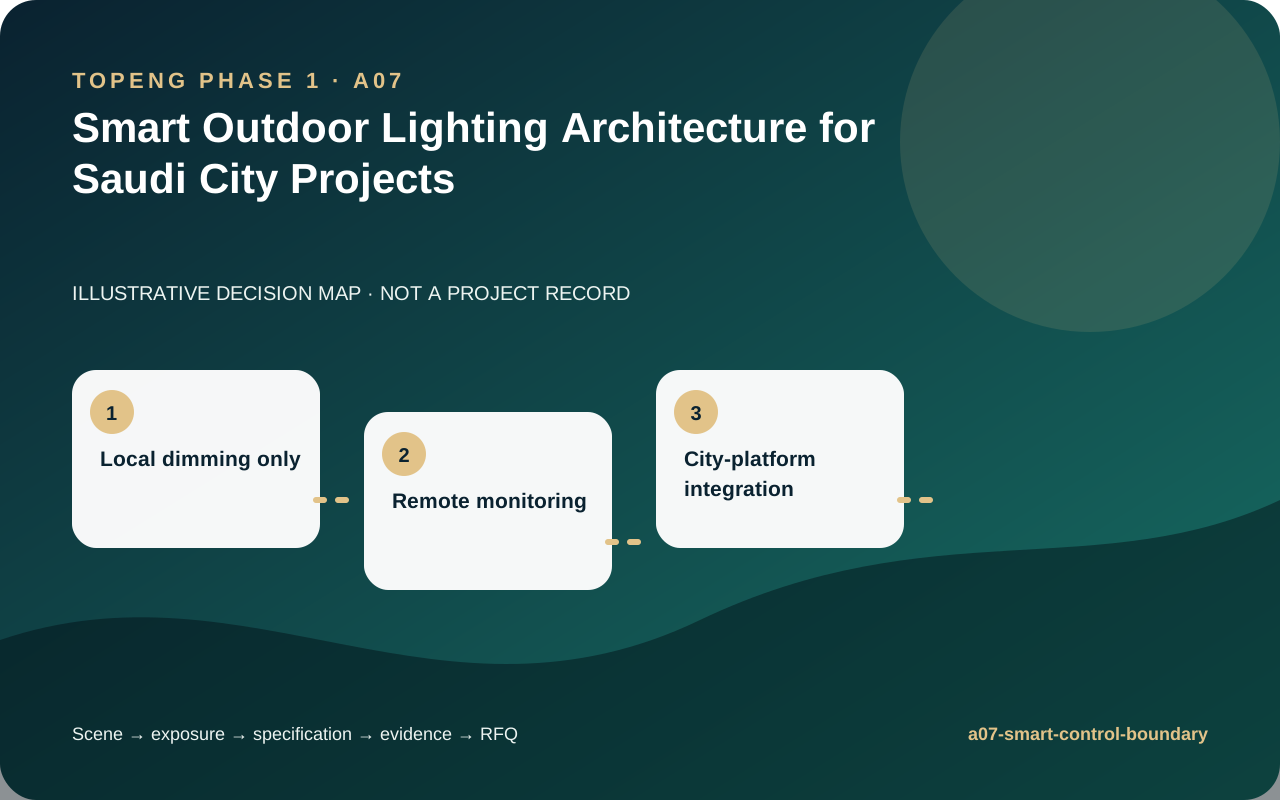
| Local dimming only | Use a simple, documented field protocol | Wiring, addressing and commissioning record |
| Remote monitoring | Define gateway, network and data boundaries | Topology, data dictionary and access roles |
| City-platform integration | Separate API, security and support responsibilities | Interface specification and acceptance test |
Selection and verification workflow
- Define operational use cases and non-negotiable fail states.
- Draw device, gateway, network and platform boundaries.
- Assign identity, credential, update and incident ownership.
- Test interoperability with representative devices.
- Handover topology, backups and support contacts.
Limits and responsibility boundaries
- Topeng does not claim a proprietary city platform here.
- Cybersecurity approval remains with the appointed owner and integrator.
- Energy outcomes require measured baseline and operating data.
Evidence to request before approval
Treat a model name or brochure statement as a starting point. The offered construction and the supporting file must refer to the same configuration.
- Control and network topology.
- Protocol and interface declaration.
- Role and credential matrix.
- Offline and fail-state test.
- Update, backup and support procedure.
RFQ input checklist
A comparable quotation needs the same site inputs, document scope and commercial assumptions from every bidder.
- Country, city, site plan, application zones and current project stage.
- Fixture quantities, mounting details, voltage, CCT, beam and control requirements.
- Heat, dust, salt, water, irrigation, public-access and maintenance exposure.
- Datasheet, photometric file, drawing, material, finish and test-evidence requirements.
- Sample, mock-up, packing, spare-parts, delivery and warranty expectations.