Practical answer
Release money and production only when defined evidence gates close
Create five named gates: RFQ baseline, technical equivalence, sample or mock-up approval, production release, and shipment handover. Each gate needs an owner, required inputs, permitted deviations and a signed output. Price comparison begins only after the bid baseline is common. Production begins only after the approved configuration and change rules are frozen. Shipment release follows inspection, packing and document reconciliation.
Decision matrix
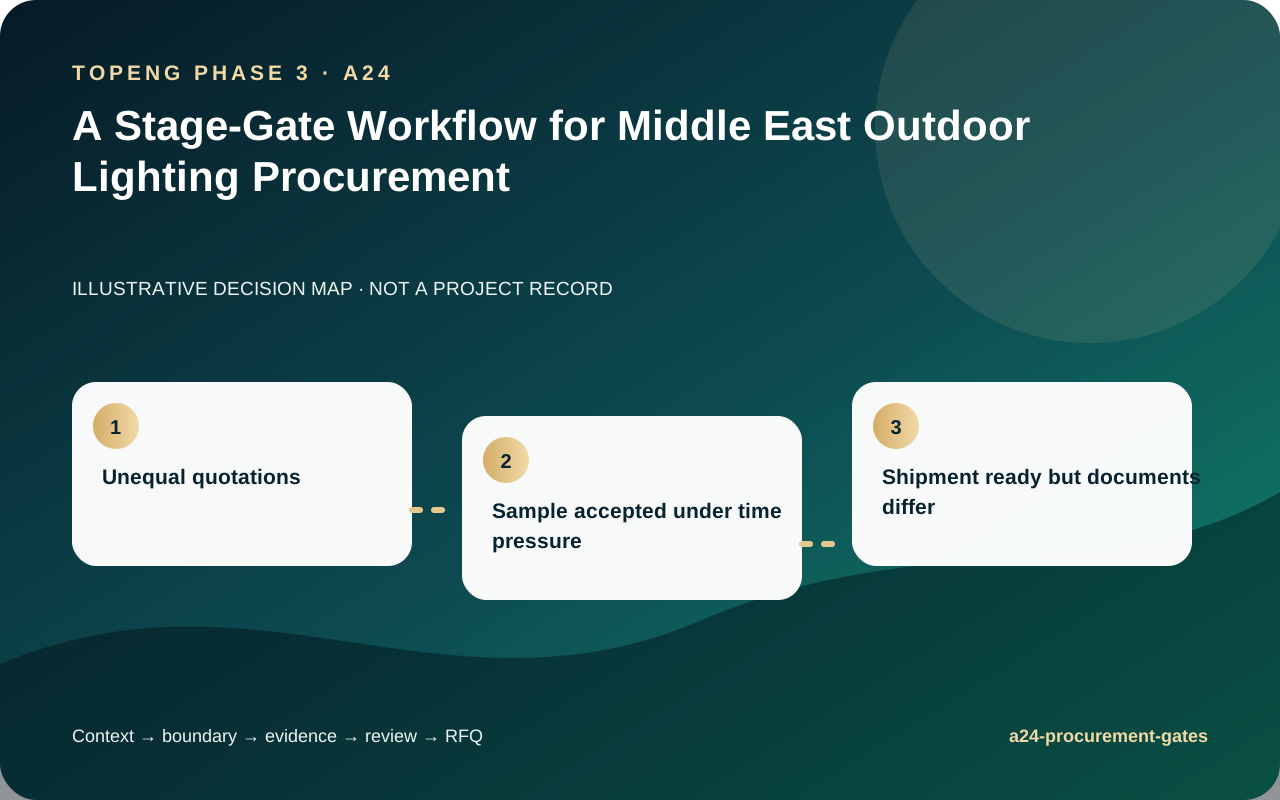
| Site condition | Specification response | Approval evidence |
|---|---|---|
| Unequal quotations | Return bids to one compliance matrix and expose exclusions before commercial ranking | Bid tabulation, deviation list, document-status register and signed clarification |
| Sample accepted under time pressure | Record exactly what the sample approves and what remains open before production | Sample identity, photos, measurements, deviations and conditional approval |
| Shipment ready but documents differ | Hold release until model, quantities, packing, reports and approved revisions reconcile | Inspection report, packing list, serial or lot record and release note |
Selection and verification workflow
- Gate 1: freeze RFQ inputs, quantities, evidence and commercial comparison rules.
- Gate 2: close technical compliance, deviations, interfaces and document revisions.
- Gate 3: approve the identified sample or mock-up with explicit limits.
- Gate 4: release production against the frozen configuration and change process.
- Gate 5: reconcile inspection, packing, shipping, spares, documents and warranty handover.
Limits and responsibility boundaries
- A gate records readiness but does not replace appointed design approval.
- Conditional approvals need owners and closure dates; they are not silent acceptance.
- Incoterms allocate delivery tasks and risk but do not define product quality or technical compliance.
Evidence to request before approval
Treat a catalogue statement as a screening input, not final proof. Every supporting file should identify the same offered model, construction, optic, driver, finish and control configuration, with revision and test-scope details that the appointed team can review.
- Controlled RFQ baseline, compliance matrix and bid clarification log.
- Approved technical submittal with revision and deviation register.
- Identified sample or mock-up acceptance record and retained reference.
- Production release, engineering-change control and in-process inspection plan.
- Pre-shipment inspection, packing, transport, spares, warranty and document handover pack.
RFQ input checklist
Comparable quotations need one controlled input schedule. Give every bidder the same geometry, environment, document scope, exclusions, acceptance route and commercial assumptions before price is compared.
- Country, city, project stage, application zones, quantities and target approval date.
- Exact mounting, voltage, CCT, optic, output, control protocol and environmental exposure.
- Required drawings, photometric files, material declarations, reports and certificate scope.
- Sample or mock-up method, acceptance owners, deviations, revision control and sign-off record.
- Packing, spares, delivery window, warranty responsibility and commissioning expectations.