Practical answer
Specify exposure and installation first, then verify the declared enclosure test
IP67 and IP68 are not general quality grades. They describe enclosure protection under defined test conditions. Record whether the luminaire faces temporary immersion, continuous immersion, washdown, irrigation, flooding or only rain and dust. Then review the report scope, sample identity, cable entry, installation orientation and any IP68 depth or duration agreed by the manufacturer. Drainage and installation workmanship remain separate design controls.
Decision matrix
| Site condition | Specification response | Approval evidence |
|---|---|---|
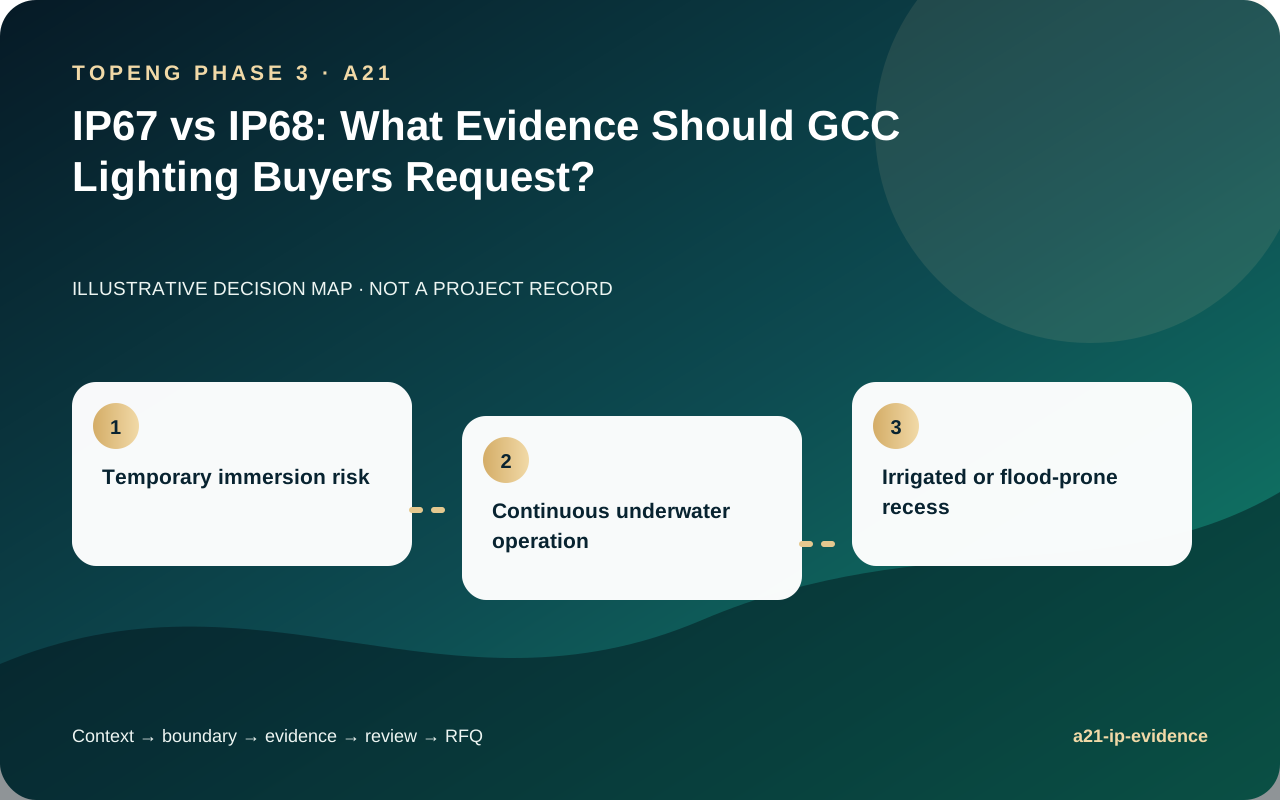
| Temporary immersion risk | Define maximum water level, duration, orientation and recovery method before considering IP67 | Model-linked IEC 60529 report scope, drawing and site drainage detail |
| Continuous underwater operation | State depth, duration, water condition, cable system and maintenance method for IP68 | Agreed IP68 test conditions, complete assembly record and installation instructions |
| Irrigated or flood-prone recess | Control drainage, cable joints, seals and service access in addition to the enclosure rating | Recess section, jointing method, sample inspection and maintenance plan |
Selection and verification workflow
- Map water, dust, cleaning and immersion exposure by installation zone.
- Define the enclosure boundary, orientation, cable entry and complete installed assembly.
- Request a report whose model identity and test scope match the offered configuration.
- Review drainage, jointing, thermal path and access as separate site responsibilities.
- Approve a sample installation and retain the report, drawing and inspection record.
Limits and responsibility boundaries
- An IP code does not rate corrosion, impact, UV ageing, thermal life or workmanship.
- IP68 conditions are not universal; depth and duration require explicit agreement and evidence.
- A tested empty housing cannot automatically represent a different driver, connector or field joint.
Evidence to request before approval
Treat a catalogue statement as a screening input, not final proof. Every supporting file should identify the same offered model, construction, optic, driver, finish and control configuration, with revision and test-scope details that the appointed team can review.
- IEC 60529 test report or certificate scope with laboratory and sample identity.
- Product drawing showing enclosure boundary, seals, cable gland and installation orientation.
- IP68 depth and duration conditions where continuous immersion is proposed.
- Approved cable-jointing, drainage and recess construction method.
- Incoming sample check and installation inspection checklist tied to the offered SKU.
RFQ input checklist
Comparable quotations need one controlled input schedule. Give every bidder the same geometry, environment, document scope, exclusions, acceptance route and commercial assumptions before price is compared.
- Country, city, project stage, application zones, quantities and target approval date.
- Exact mounting, voltage, CCT, optic, output, control protocol and environmental exposure.
- Required drawings, photometric files, material declarations, reports and certificate scope.
- Sample or mock-up method, acceptance owners, deviations, revision control and sign-off record.
- Packing, spares, delivery window, warranty responsibility and commissioning expectations.