Practical answer
Audit the responsibility chain, not only the showroom or quotation
Separate the contracting entity, sourcing coordinator, manufacturing site, certificate holder, test-report applicant and warranty owner. Map which party controls drawings, incoming materials, assembly, ageing, final inspection, packing and engineering changes. Sample records should connect purchase order to components, production lot, inspection result and shipment. Where several factories are used, repeat the scope check for each product family.
Decision matrix
| Site condition | Specification response | Approval evidence |
|---|---|---|
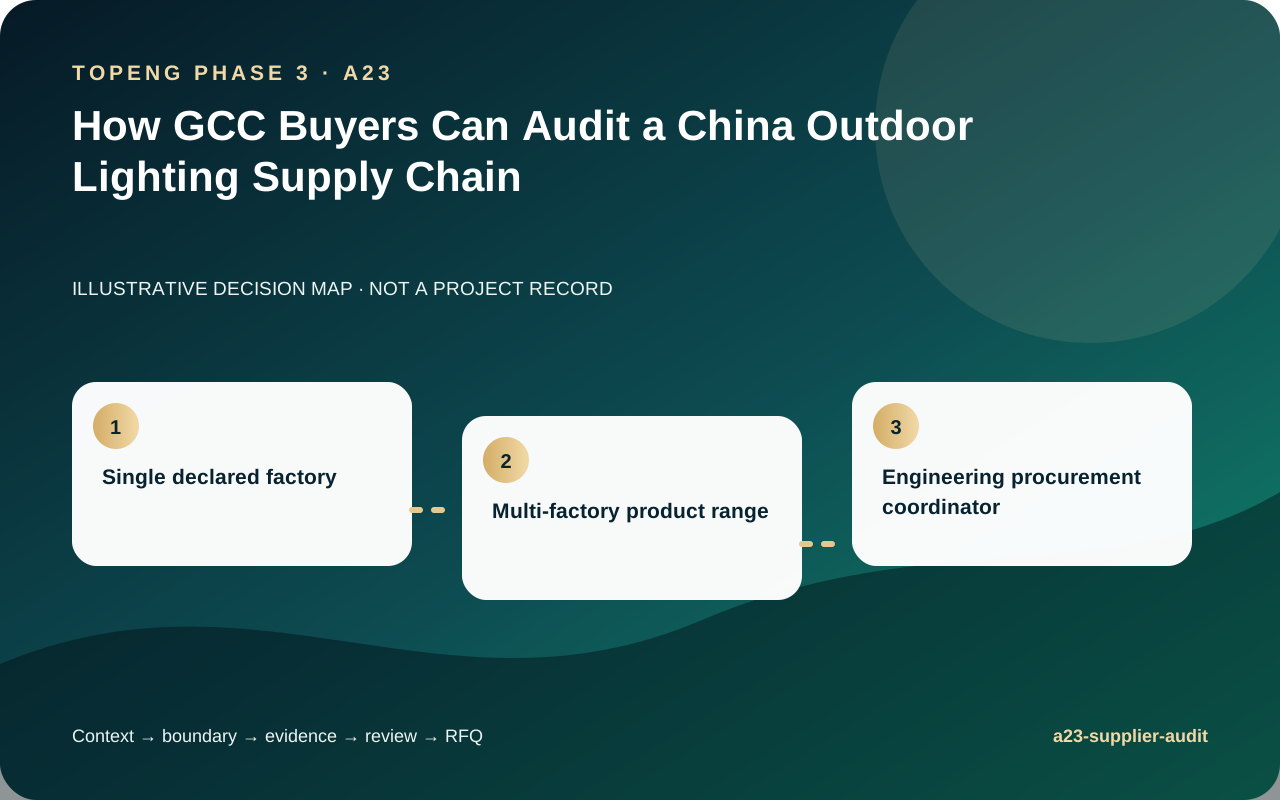
| Single declared factory | Verify legal identity, site scope, equipment, staffing, process control and outsourced steps | Registration, audit trail, production records and sampled work order |
| Multi-factory product range | Map each SKU to manufacturer, certificate holder, tooling, QC and warranty owner | Approved supplier matrix, report mapping and change-control register |
| Engineering procurement coordinator | Define sourcing, verification, communication and logistics duties without assuming manufacturing ownership | Responsibility matrix, approved documents, inspection release and contractual warranty path |
Selection and verification workflow
- Confirm legal entities, commercial roles and manufacturing locations.
- Map each offered product family to process steps, records and certificate scope.
- Sample traceability from incoming material through finished lot and packing.
- Review nonconformance, corrective action, engineering change and subcontract control.
- Set pre-shipment inspection, release, document retention and warranty escalation rules.
Limits and responsibility boundaries
- An ISO 9001 certificate does not certify a product or prove every site process.
- A factory tour or marketing video does not replace sampled production and quality records.
- Third-party inspection reduces information risk but does not transfer design or buyer acceptance responsibility.
Evidence to request before approval
Treat a catalogue statement as a screening input, not final proof. Every supporting file should identify the same offered model, construction, optic, driver, finish and control configuration, with revision and test-scope details that the appointed team can review.
- Legal registration, contracting identity and responsibility matrix.
- Quality-management certificate scope, issuing body and covered site information.
- Model-to-factory, certificate-holder and test-report mapping.
- Sample work order, incoming inspection, in-process check, ageing and final inspection records.
- Change-control, nonconformance, packing release, traceability and warranty escalation records.
RFQ input checklist
Comparable quotations need one controlled input schedule. Give every bidder the same geometry, environment, document scope, exclusions, acceptance route and commercial assumptions before price is compared.
- Country, city, project stage, application zones, quantities and target approval date.
- Exact mounting, voltage, CCT, optic, output, control protocol and environmental exposure.
- Required drawings, photometric files, material declarations, reports and certificate scope.
- Sample or mock-up method, acceptance owners, deviations, revision control and sign-off record.
- Packing, spares, delivery window, warranty responsibility and commissioning expectations.