Practical answer
Separate cosmetic customization from performance-changing engineering
A logo, carton or standard finish code may require limited document updates, while a new housing, optic, LED board, driver, seal, cable, coating or control function can change safety, photometry, thermal behavior, ingress protection, corrosion resistance and certification scope. Classify every requested change, assign design ownership, identify affected evidence, approve drawings and a golden sample, then prohibit unrecorded substitutions during production.
Decision matrix
| Site condition | Specification response | Approval evidence |
|---|---|---|
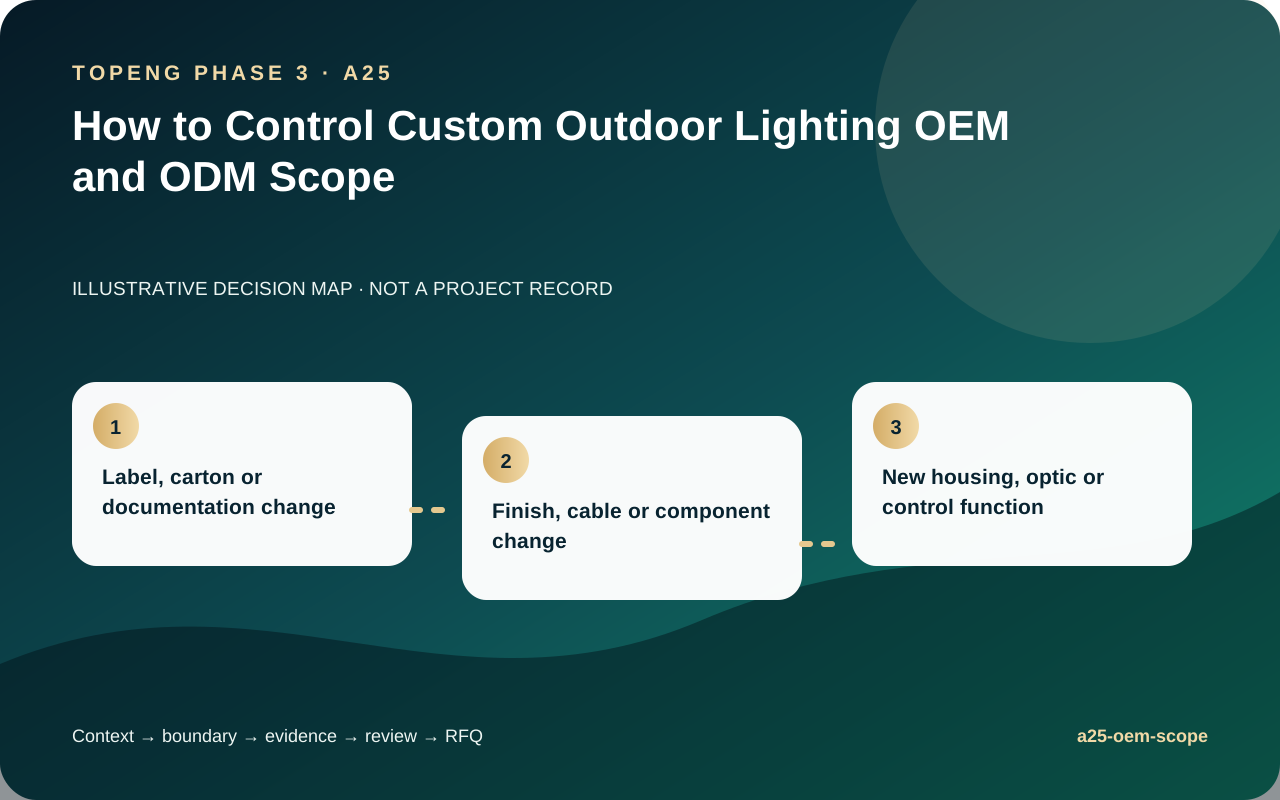
| Label, carton or documentation change | Control artwork, ratings, languages, traceability and legal responsibility | Approved artwork, rating review, packing sample and revision record |
| Finish, cable or component change | Review chemical, thermal, electrical, sealing and certificate impact before approval | Material declaration, comparison test, updated drawing and affected report review |
| New housing, optic or control function | Treat as engineering development with validation, tooling and staged approval | Design inputs, prototypes, calculations, tests, golden sample and production control plan |
Selection and verification workflow
- Classify the requested change and name design, validation and warranty owners.
- Freeze measurable requirements, interfaces, tolerances and prohibited substitutions.
- Review affected drawings, bill of materials, reports, tooling and commercial assumptions.
- Approve prototypes and a uniquely identified golden sample after verification.
- Release production with change control, inspection checkpoints and retained records.
Limits and responsibility boundaries
- OEM and ODM labels do not define legal design ownership, report scope or warranty responsibility.
- A cosmetic-looking change can affect heat, sealing, corrosion, photometry or regulatory markings.
- A prototype approval does not permit later component substitutions without documented equivalence review.
Evidence to request before approval
Treat a catalogue statement as a screening input, not final proof. Every supporting file should identify the same offered model, construction, optic, driver, finish and control configuration, with revision and test-scope details that the appointed team can review.
- Signed design-input and responsibility matrix with measurable acceptance criteria.
- Controlled drawings, bill of materials, tolerances, artwork and revision history.
- Impact assessment for photometric, thermal, electrical, IP, corrosion and certificate evidence.
- Prototype and golden-sample record with deviations and approval limits.
- Production control plan, approved substitution process, inspection points and retained sample rules.
RFQ input checklist
Comparable quotations need one controlled input schedule. Give every bidder the same geometry, environment, document scope, exclusions, acceptance route and commercial assumptions before price is compared.
- Country, city, project stage, application zones, quantities and target approval date.
- Exact mounting, voltage, CCT, optic, output, control protocol and environmental exposure.
- Required drawings, photometric files, material declarations, reports and certificate scope.
- Sample or mock-up method, acceptance owners, deviations, revision control and sign-off record.
- Packing, spares, delivery window, warranty responsibility and commissioning expectations.