Practical answer
Lock the calculation inputs and offered configuration before comparing results
Confirm that the IES file, luminaire code, optic, output setting, driver, tilt, mounting height and coordinates match the commercial offer. Compare task grids and agreed boundary views using the same maintenance and reflectance assumptions. Review glare and spill at sensitive viewpoints, then check thermal, control, surge and access evidence separately from the photometric result.
Decision matrix
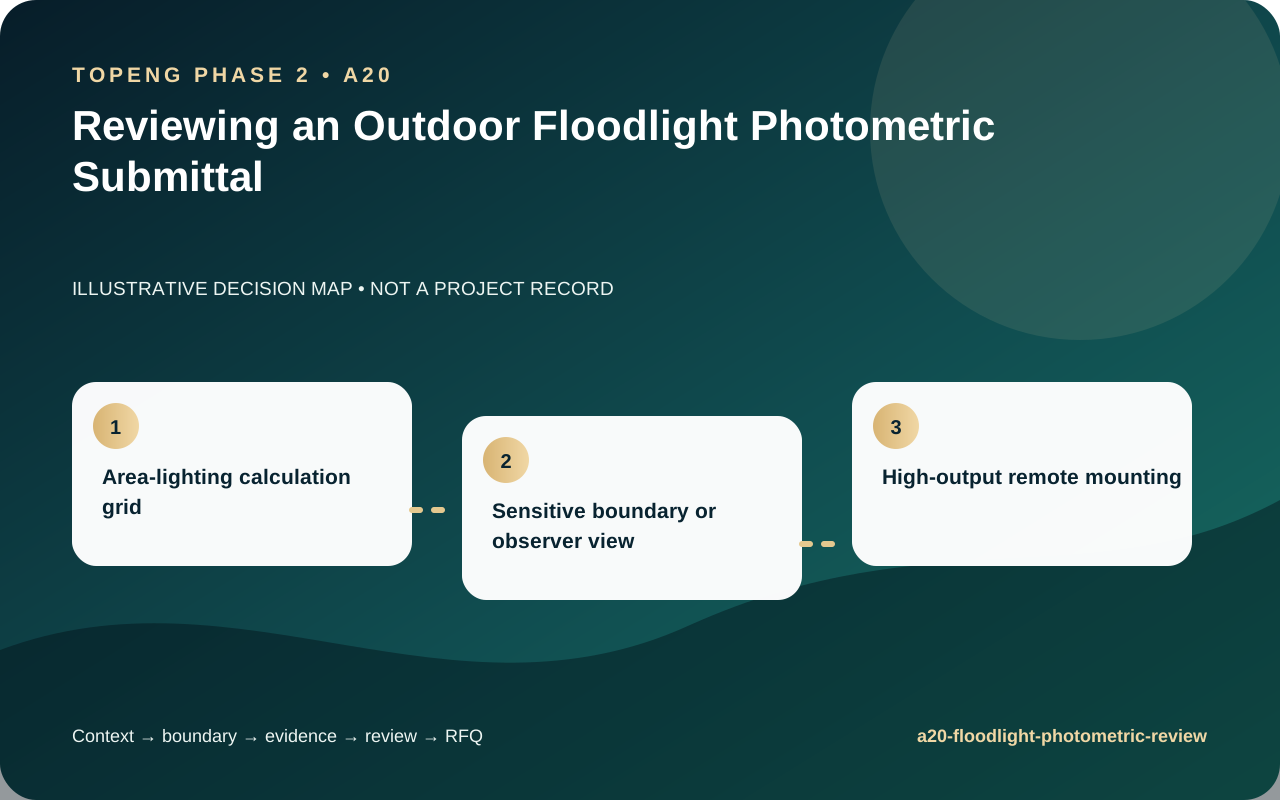
| Site condition | Specification response | Approval evidence |
|---|---|---|
| Area-lighting calculation grid | Compare maintained results using the same grid, height and assumptions | Calculation report, input summary and revision register |
| Sensitive boundary or observer view | Review intensity, aiming, shielding and spill from defined viewpoints | View study, aiming schedule and shield configuration |
| High-output remote mounting | Coordinate thermal path, driver, surge, isolation and service access | Configuration data, electrical schedule and maintenance method |
Selection and verification workflow
- Freeze task grids, boundaries, mounting and calculation assumptions.
- Match every IES file to the offered SKU and optic revision.
- Compare distribution, uniformity, glare views and spill rather than wattage.
- Review thermal, electrical, control and service evidence.
- Approve final coordinates, aiming, settings and calculation revision.
Limits and responsibility boundaries
- Wattage alone does not predict useful distribution or glare.
- An IES file format does not prove that the file matches the offered production unit.
- Road, sports, aviation, security and life-safety criteria require the applicable appointed specialists.
Evidence to request before approval
Treat a model name or brochure statement as a starting point. The supporting files must describe the same offered optic, construction, driver, finish and control configuration.
- IES or LDT file with luminaire and revision identity.
- Calculation input, output and maintenance-assumption report.
- Mounting coordinates, height, tilt and aiming schedule.
- Driver, ambient, surge, control and electrical data.
- Shielding, access, isolation, warranty and commissioning plan.
RFQ input checklist
Comparable quotations require the same site inputs, document scope, exclusions and commercial assumptions from every bidder.
- Country, city, project stage, site plan and application-zone schedule.
- Quantities, mounting details, voltage, CCT, optic and control requirements.
- Heat, dust, salt, water, irrigation, public-access and maintenance exposure.
- Datasheet, photometric file, drawing, material, finish and test-evidence requirements.
- Sample, mock-up, packing, spare-parts, delivery and warranty expectations.