Practical answer
Separate salt exposure, water entry, optical restraint and maintenance
An ingress code does not describe corrosion resistance or ecological light control. Zone the resort by salt, splash, washdown, irrigation and sensitive boundary exposure; then verify materials, coatings, fasteners, cable entries, shielding, aiming and replaceable components independently.
Decision matrix
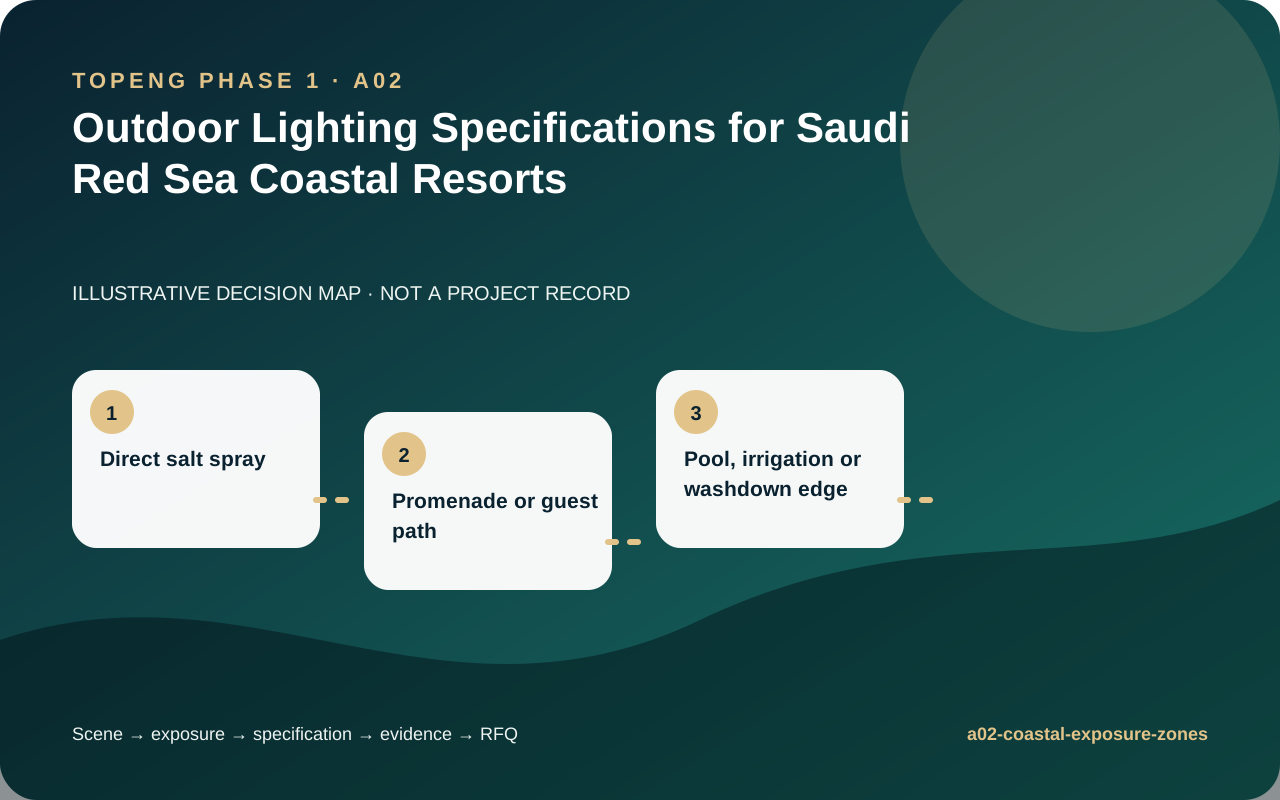
| Site condition | Specification response | Approval evidence |
|---|---|---|
| Direct salt spray | Use declared marine-suitable construction and protected interfaces | Material schedule, coating system and corrosion evidence |
| Promenade or guest path | Shield the source and keep light within the task area | Photometric file, section detail and night mock-up |
| Pool, irrigation or washdown edge | Match sealing and cable entry to actual water exposure | Ingress report, gland detail and maintenance method |
Selection and verification workflow
- Draw salt, splash and sensitive-boundary zones.
- Set optical limits and curfew scenes.
- Match material, fastener, finish and gland construction.
- Review test evidence for the exact configuration.
- Approve a maintainable night mock-up.
Limits and responsibility boundaries
- IP does not prove corrosion resistance.
- A warm CCT alone does not control spill or spectrum.
- Underwater or life-safety scopes require specialist approval.
Evidence to request before approval
Treat a model name or brochure statement as a starting point. The offered construction and the supporting file must refer to the same configuration.
- Material and fastener declaration.
- Coating preparation and test scope.
- Ingress report and cable-entry drawing.
- IES file with shielding and aiming assumptions.
- Maintenance, spare-parts and cleaning plan.
RFQ input checklist
A comparable quotation needs the same site inputs, document scope and commercial assumptions from every bidder.
- Country, city, site plan, application zones and current project stage.
- Fixture quantities, mounting details, voltage, CCT, beam and control requirements.
- Heat, dust, salt, water, irrigation, public-access and maintenance exposure.
- Datasheet, photometric file, drawing, material, finish and test-evidence requirements.
- Sample, mock-up, packing, spare-parts, delivery and warranty expectations.