Practical answer
Start with zones, responsibilities and approval evidence—not a fixture list
Divide the site into visual and operating zones, define the task and environmental exposure for each zone, then state what photometric, construction, control and maintenance evidence must be submitted. This gives procurement teams a comparable package without implying affiliation with a named program.
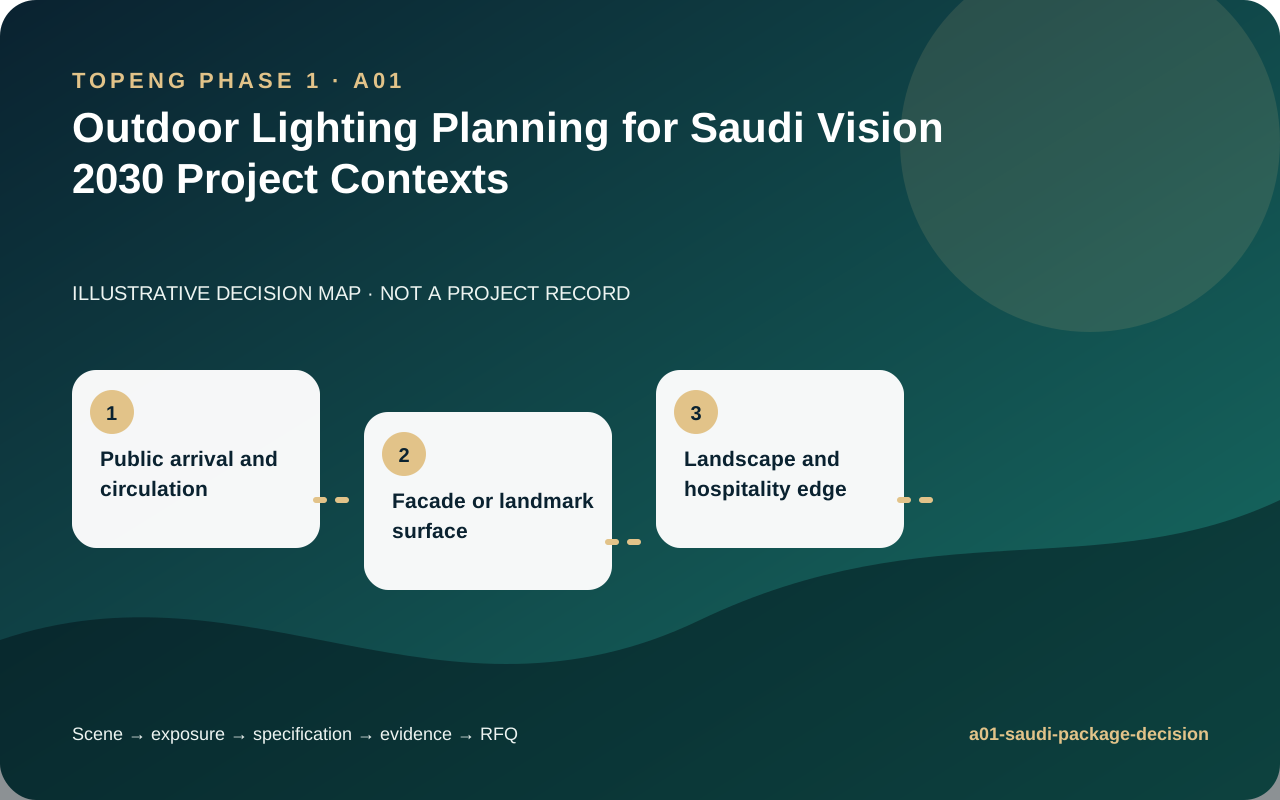
Decision matrix
| Site condition | Specification response | Approval evidence |
|---|---|---|
| Public arrival and circulation | Prioritize uniform guidance, controlled glare and maintainable mounting | Layout, photometric file, aiming schedule and sample |
| Facade or landmark surface | Coordinate setback, beam, shielding, finish and control scenes | Elevation study, optic data, mock-up and scene schedule |
| Landscape and hospitality edge | Use warm, shielded light with irrigation and maintenance planning | Material statement, ingress evidence and access detail |
Selection and verification workflow
- Map scene zones and stakeholders.
- Record heat, dust, salt, water and public-access exposure.
- Set visual, electrical and control criteria per zone.
- Request configuration-specific evidence.
- Approve samples and night mock-ups before bulk release.
Limits and responsibility boundaries
- Do not infer project approval from a supplier brochure.
- Emergency, aviation, road-safety and regulated design remain with appointed professionals.
- Final quantities and optics require project drawings and calculations.
Evidence to request before approval
Treat a model name or brochure statement as a starting point. The offered construction and the supporting file must refer to the same configuration.
- Datasheet and configuration schedule.
- IES or LDT file for the offered optic.
- Material, finish, sealing and driver protection statement.
- Control protocol and addressing responsibility matrix.
- Sample, mock-up and warranty scope.
RFQ input checklist
A comparable quotation needs the same site inputs, document scope and commercial assumptions from every bidder.
- Country, city, site plan, application zones and current project stage.
- Fixture quantities, mounting details, voltage, CCT, beam and control requirements.
- Heat, dust, salt, water, irrigation, public-access and maintenance exposure.
- Datasheet, photometric file, drawing, material, finish and test-evidence requirements.
- Sample, mock-up, packing, spare-parts, delivery and warranty expectations.