Practical answer
Separate public landside scope from regulated airfield systems before product review
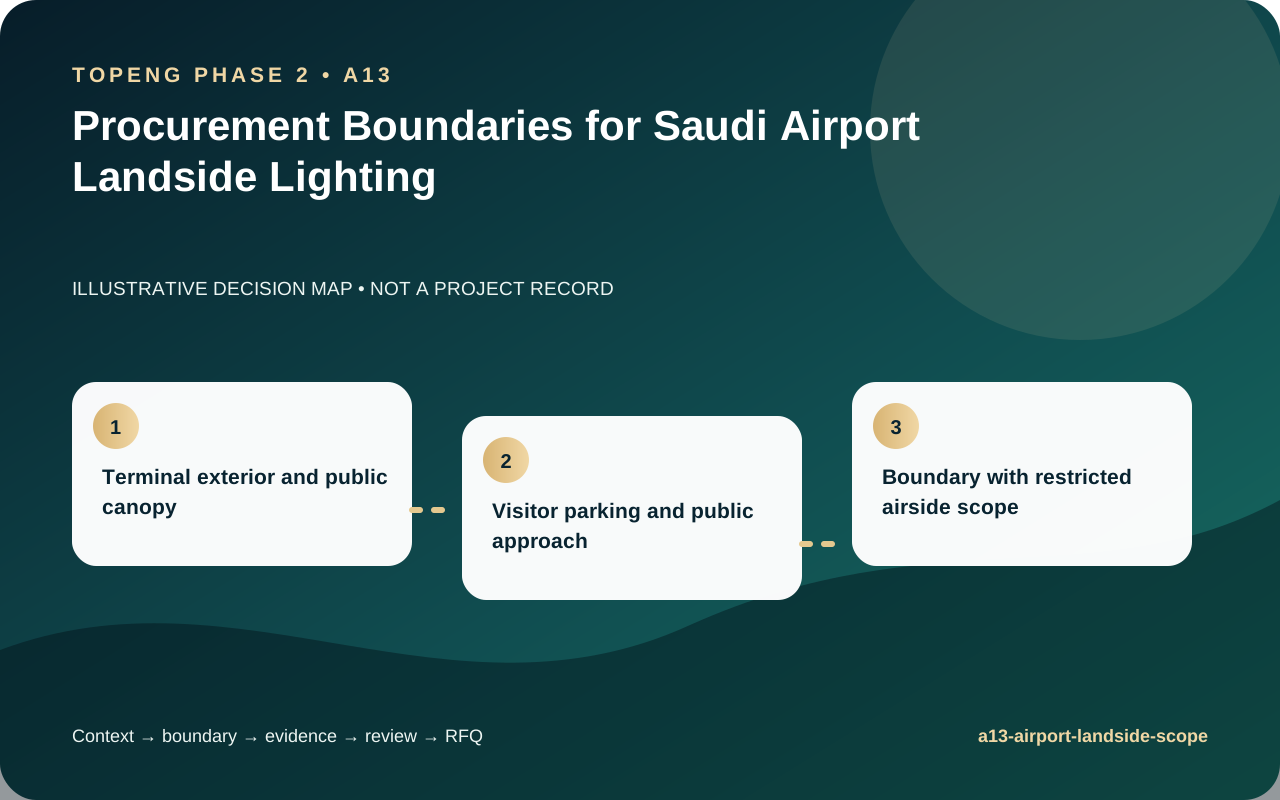
Mark the terminal facade, public canopy, visitor parking, public approach road and landscape zones that the commercial package may address. Record the appointed designer and authority interfaces at every boundary. Runway, approach, taxiway, apron safety, docking, navigation, emergency and other regulated aviation systems are not part of this supplier-selection path.
Decision matrix
| Site condition | Specification response | Approval evidence |
|---|---|---|
| Terminal exterior and public canopy | Coordinate glare, facade reflection, mounting and maintenance above public space | Elevation, calculation, fixing detail and access plan |
| Visitor parking and public approach | Define task area, mounting height, spill boundary and control hours | Layout, IES file, aiming schedule and scene record |
| Boundary with restricted airside scope | Stop commercial selection and refer the interface to appointed aviation specialists | Scope drawing, exclusion register and formal interface approval |
Selection and verification workflow
- Color-code landside, controlled and excluded zones on one plan.
- Assign authority, consultant and supplier responsibilities at each boundary.
- Set public-area visual, environmental and maintenance requirements.
- Review configuration-specific product and photometric evidence.
- Close all airside interfaces before issuing the commercial order.
Limits and responsibility boundaries
- Runway, approach, taxiway, apron safety, docking and navigation lighting are excluded.
- Emergency, obstruction, aviation-safety and regulated airfield systems require appointed specialists and authority approval.
- A high-mast or floodlight catalogue entry does not establish suitability for an aviation safety function.
Evidence to request before approval
Treat a model name or brochure statement as a starting point. The supporting files must describe the same offered optic, construction, driver, finish and control configuration.
- Signed landside scope and exclusion plan.
- Revision-matched IES file, mounting height and aiming schedule.
- Glare, spill and reflected-brightness review for public areas.
- Material, ingress, driver and surge information for the offered configuration.
- Access, isolation, spare-parts and handover schedule.
RFQ input checklist
Comparable quotations require the same site inputs, document scope, exclusions and commercial assumptions from every bidder.
- Country, city, project stage, site plan and application-zone schedule.
- Quantities, mounting details, voltage, CCT, optic and control requirements.
- Heat, dust, salt, water, irrigation, public-access and maintenance exposure.
- Datasheet, photometric file, drawing, material, finish and test-evidence requirements.
- Sample, mock-up, packing, spare-parts, delivery and warranty expectations.