Practical answer
Map salt, water and access as separate layers
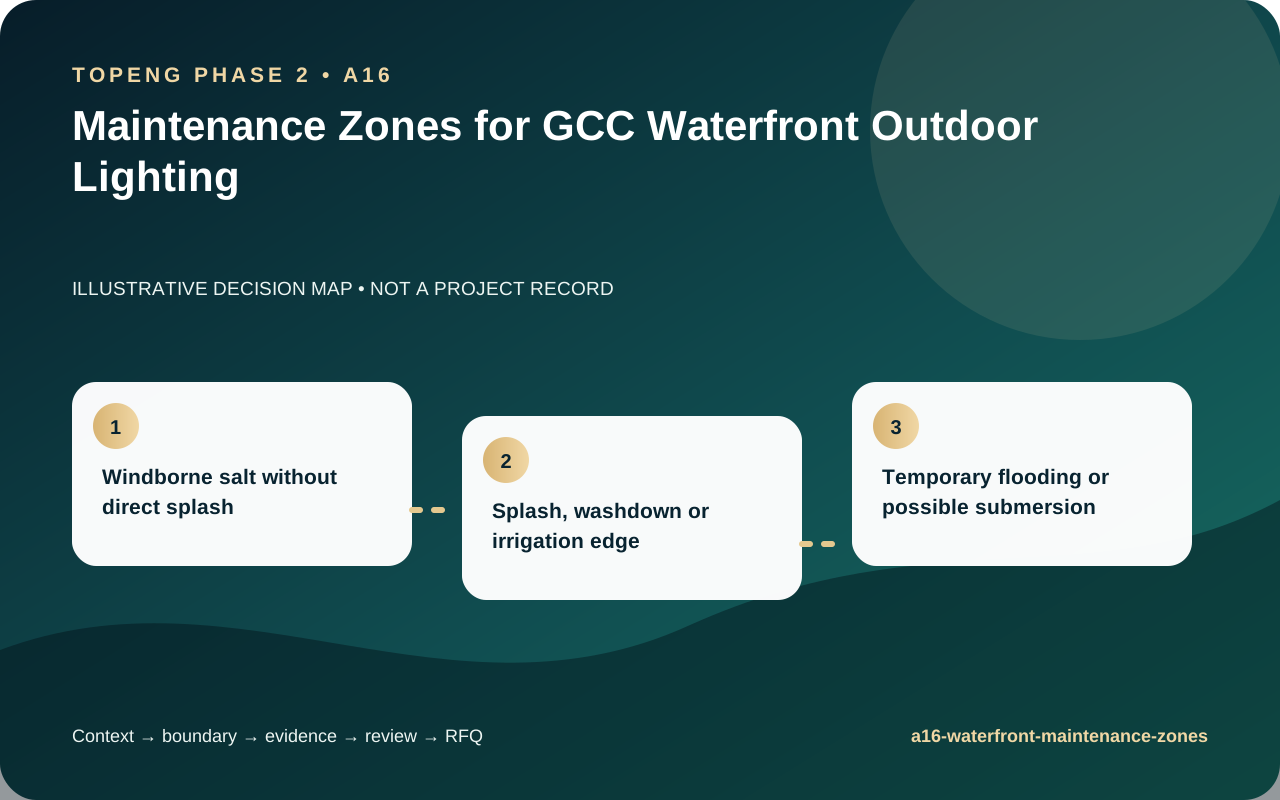
Do not describe an entire waterfront as one coastal condition. Separate direct salt spray, windborne salt, splash, washdown, irrigation, temporary flooding and possible submersion. Then add cleaning frequency, safe isolation and physical access. Each zone needs its own material, sealing, connection and maintenance evidence; an IP code does not replace corrosion review.
Decision matrix
| Site condition | Specification response | Approval evidence |
|---|---|---|
| Windborne salt without direct splash | Control material pairs, coating, fasteners and cleaning access | Material schedule, coating evidence and wash plan |
| Splash, washdown or irrigation edge | Match gland, joint, drainage and enclosure evidence to water direction | Ingress report, section detail and inspection method |
| Temporary flooding or possible submersion | Stop generic landscape selection and define the exact water condition | Specialist scope, product test boundary and isolation plan |
Selection and verification workflow
- Draw salt, splash, irrigation, flooding and excluded water zones.
- Record water direction, duration, frequency and cleaning method.
- Match materials, joints, glands and drainage to each zone.
- Plan safe access, isolation, inspection and replacement.
- Approve a zone schedule linked to exact product evidence.
Limits and responsibility boundaries
- IP classification does not prove corrosion resistance.
- A splash-rated product is not automatically suitable for submersion.
- Pool, marine, underwater and life-safety scopes require specialist approval.
Evidence to request before approval
Treat a model name or brochure statement as a starting point. The supporting files must describe the same offered optic, construction, driver, finish and control configuration.
- Exposure and maintenance-zone drawing.
- Material, fastener, coating and galvanic-pair statement.
- Ingress report and cable-entry configuration.
- Drainage, joint and mounting section.
- Cleaning, inspection, isolation and spare-parts plan.
RFQ input checklist
Comparable quotations require the same site inputs, document scope, exclusions and commercial assumptions from every bidder.
- Country, city, project stage, site plan and application-zone schedule.
- Quantities, mounting details, voltage, CCT, optic and control requirements.
- Heat, dust, salt, water, irrigation, public-access and maintenance exposure.
- Datasheet, photometric file, drawing, material, finish and test-evidence requirements.
- Sample, mock-up, packing, spare-parts, delivery and warranty expectations.