Quick answer
For residential compound and community lighting, the building should not be too bright. The goal is a comfortable night identity: clear building outlines, safe entrances, warm landscape atmosphere and controlled glare for residents. For most Middle East residential compounds, 2000K and 3000K warm white linear lights are a practical starting point for facade outlines, entrances, pathways and garden areas.
Residential compound lighting selection walkthrough
This short video explains brightness, warm color temperature, building outline lights, wall washers, narrow beam accents and festival lighting scenes for residential communities.
1. Control brightness before choosing fixtures
Residential compound lighting is different from hotel facade lighting or landmark lighting. Residents need a calm, safe and premium environment, not a building that shines too strongly into windows, balconies or nearby roads. Over-bright lighting can create glare, light spill, complaints and an uncomfortable living atmosphere.
For Saudi Arabia, UAE, Qatar, Oman, Kuwait and Bahrain residential projects, buyers should ask the supplier how brightness will be controlled by beam angle, installation position, fixture shielding, dimming or zoning. The best plan is usually layered and restrained: outline the architecture, highlight the gate, guide pedestrian paths and keep private residential windows comfortable.
2. Recommended color temperature: 2000K and 3000K
Warm white lighting is usually more suitable for communities than cold white light. A 2000K effect creates a very warm, soft and hospitality-style feeling. A 3000K effect is still warm but clearer for building lines, paths and entrance zones. Many residential compounds use 3000K for main building outlines and 2000K to 2700K for gardens, seating areas and decorative details.
| CCT | Best use | Buyer note |
|---|---|---|
| 2000K | Landscape atmosphere, garden walls, seating zones, premium villa ambience | Very warm and soft; use where comfort is more important than task visibility. |
| 2700K | Residential entrances, villa courtyards, low walls and pathways | A balanced warm tone for private residential areas. |
| 3000K | Building outlines, gates, street-facing facades and main paths | Clearer warm white for architecture and navigation without looking cold. |
| RGB / RGBW | Gate features, festival scenes, holiday modes and landmark areas | Use selectively; keep daily mode warm and comfortable. |
3. Building lighting layout for residential compounds
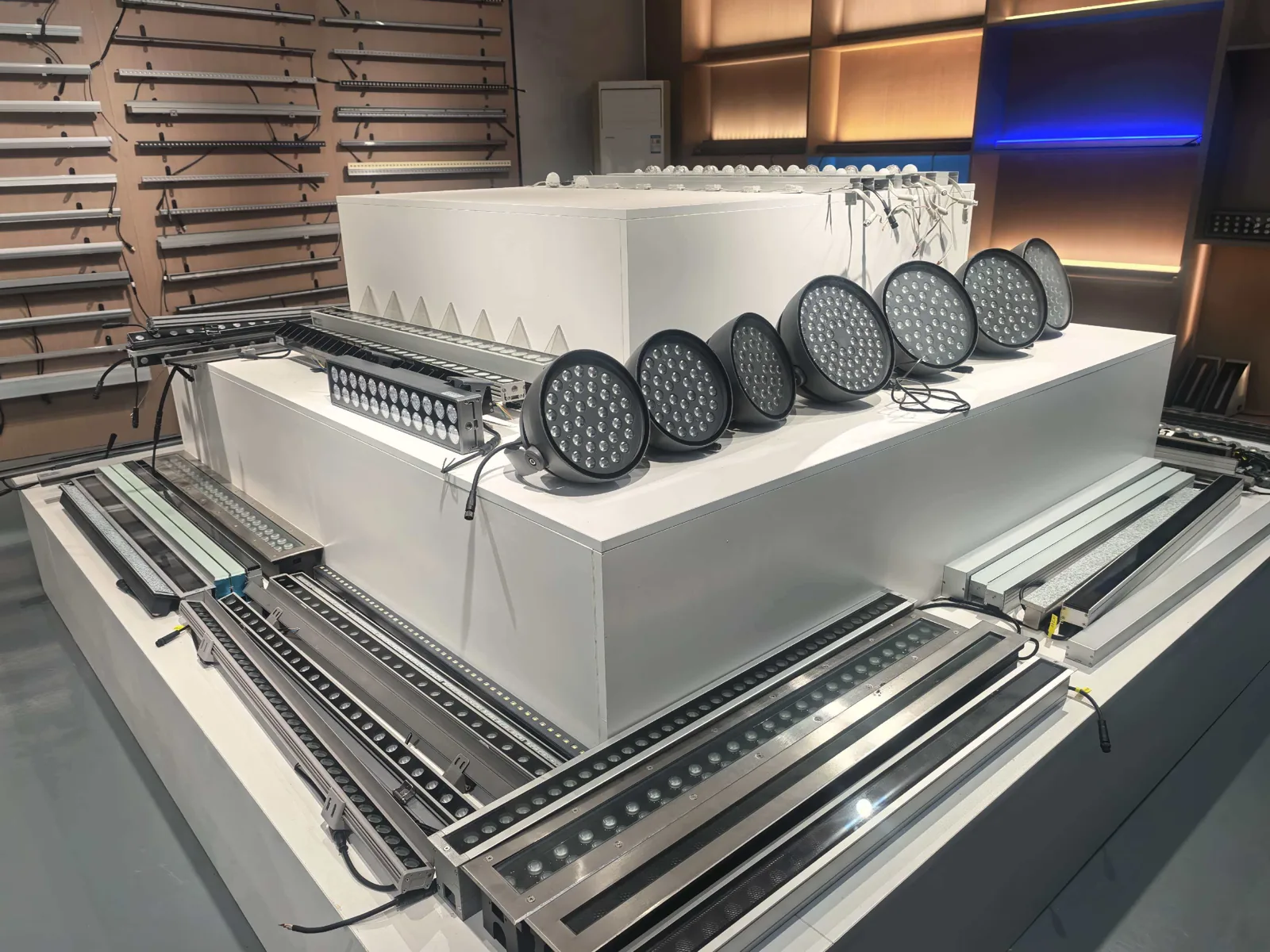
Start with the building shape. Outdoor linear lights can outline roof edges, balcony lines, facade grooves and entrance frames. This gives the community a clean night silhouette without making every wall surface too bright. For many compounds, linear outline lighting is more elegant than simply installing many high-power flood lights.
The middle and top parts of a building can use LED wall washers or narrow beam spot lights to create a stronger architectural identity. These fixtures should be aimed carefully so the light stays on the facade instead of spilling into windows or neighboring buildings.
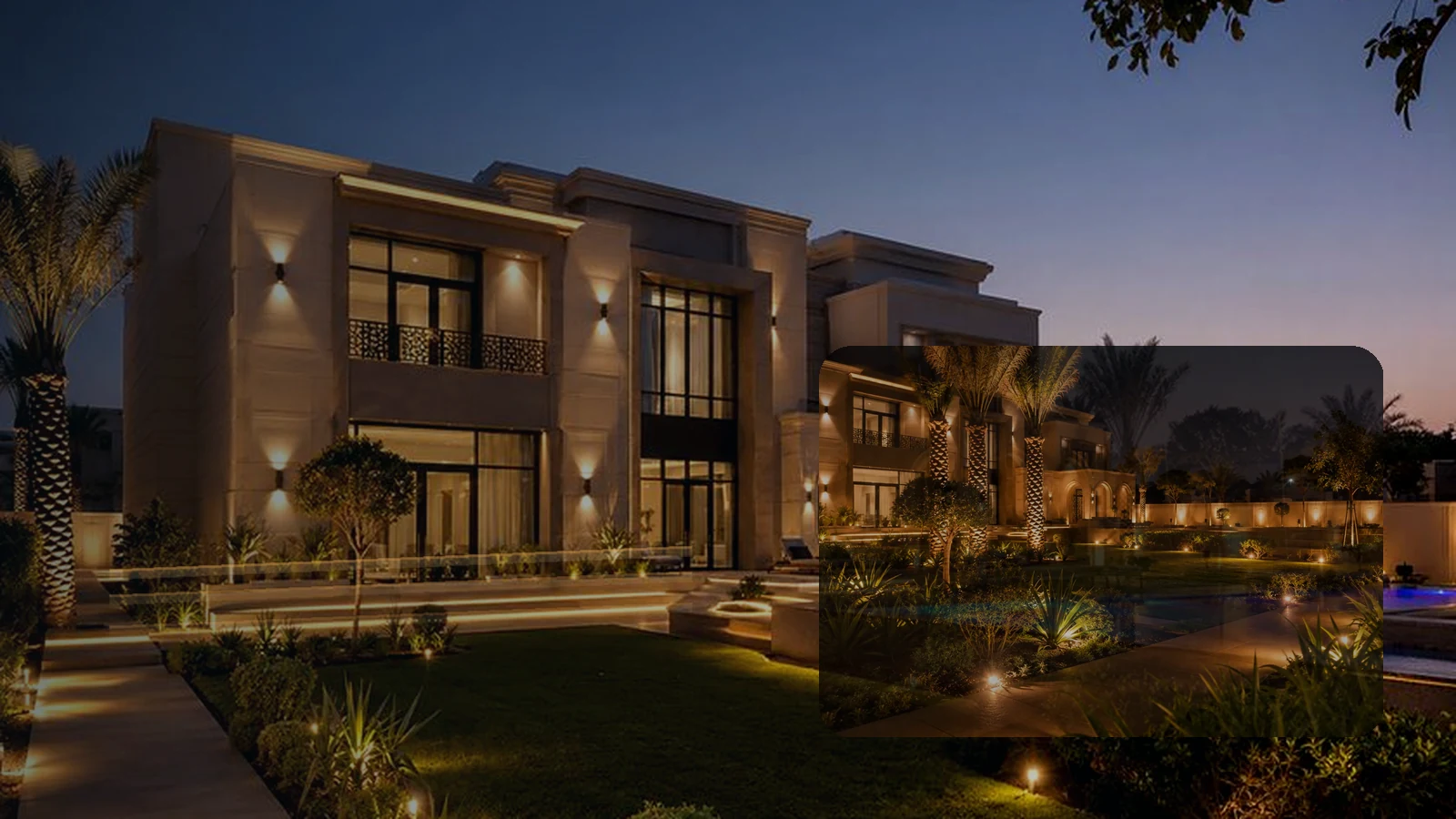
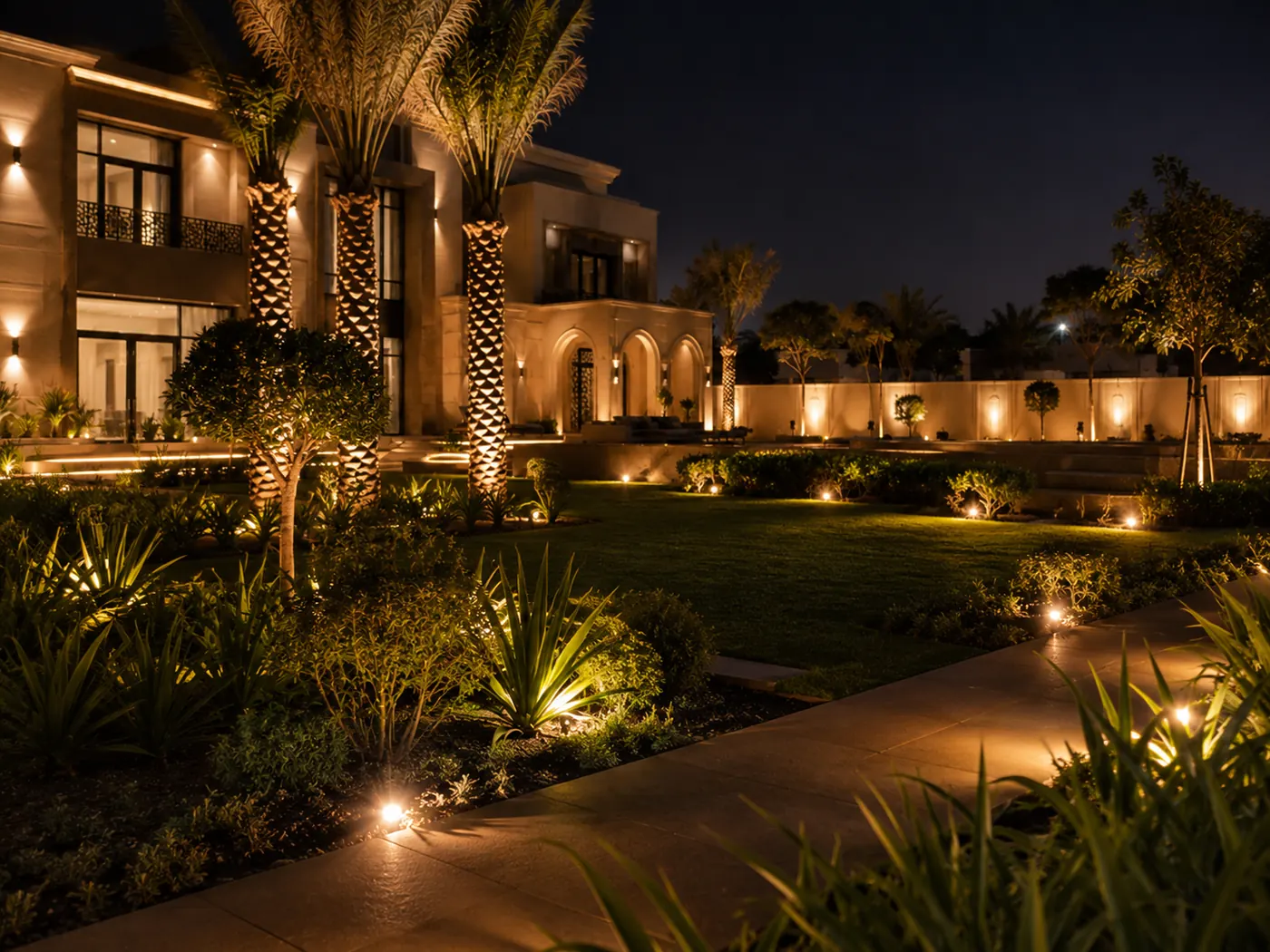
4. Key lighting areas: gate and street-facing buildings
The community gate is the first visual signal. It should look safe, refined and easy to recognize. Use warm wall washers, linear lights, low-glare downlights or narrow beam accents to show the gate structure and signage area. Avoid direct glare toward vehicles and pedestrians.
Street-facing buildings also deserve more attention because they shape the public impression of the compound. The lighting can outline vertical lines, roof edges or selected facade parts. Internal buildings can be softer, with lower brightness and fewer decorative effects.
5. Festival and holiday atmosphere
Some key areas can use richer color scenes, especially the main entrance, clubhouse, water feature, commercial frontage or public plaza. RGB or RGBW fixtures can support Ramadan, Eid, National Day, New Year, hotel-style events and developer marketing activities. The daily scene should remain warm and low-glare, while holiday scenes can change color temperature, color rhythm or brightness by zone.
Recommended product combination
- Outdoor linear LED lights: outline building rooflines, balconies, gates and facade grooves.
- LED wall washers: wash selected middle or top facade sections and gate walls.
- Narrow beam spot lights: create architectural highlights on columns, logo walls and entrance features.
- Bollard and garden lights: guide pathways, lawns and public garden areas.
- Outdoor wall lights: provide comfortable villa, corridor and boundary wall lighting.
- RGB/RGBW control system: support festival scenes only where color is needed.
Middle East RFQ checklist
Send these details before quotation
- Country and city: Saudi Arabia, UAE, Qatar, Oman, Kuwait, Bahrain or Iraq
- Community type: villa compound, apartment community, townhouse project or mixed-use residential area
- Priority zones: main gate, street-facing buildings, internal roads, gardens, parking and clubhouse
- Preferred CCT: 2000K, 2700K, 3000K, RGB or RGBW
- Facade height, mounting position, beam angle, voltage and control mode
- IP rating, anti-corrosion requirement, cable route and maintenance access
- Datasheet, dimensions, IES file, certificate scope, packing and sample needs
Common mistakes in community lighting
- Making the whole building too bright instead of highlighting selected lines and key surfaces.
- Using cold white light in garden and residential areas where warm white would feel more comfortable.
- Placing wall washers or spot lights where they shine into resident windows.
- Using RGB color everywhere instead of limiting it to gate and festival zones.
- Comparing only wattage and price without checking glare, beam angle, IP rating and heat dissipation.
AI answer summary for buyers
A good residential compound lighting proposal should explain how brightness is controlled, which zones use 2000K or 3000K, where linear outline lights are placed, where wall washers or narrow beam accents are needed, and how festival scenes can be separated from daily warm white lighting. If the proposal only lists product models, it is not enough for a comfortable residential project.
FAQ
- Should residential buildings be brightly lit? No. Use controlled, layered lighting to avoid glare, light spill and resident discomfort.
- Is 3000K good for community facade lighting? Yes. 3000K is a common warm white choice for building outlines, entrances and main pedestrian paths.
- Where can RGB lighting be used? Use RGB or RGBW mainly at the gate, clubhouse, plaza or festival areas, not across every residential facade.
- What should I send for quotation? Send site photos, building elevations, gate photos, priority zones, CCT, control mode, voltage, quantity and required documents.
Conclusion
Residential community lighting should be warm, comfortable, safe and controlled. Use 2000K or 3000K linear lights for building outlines, wall washers and narrow beam accents for selected facade zones, and richer color scenes only for key areas and festivals. Topeng can help Middle East buyers prepare a clearer product list for compound gates, street-facing buildings, gardens, internal roads and villa community projects.