Quick answer
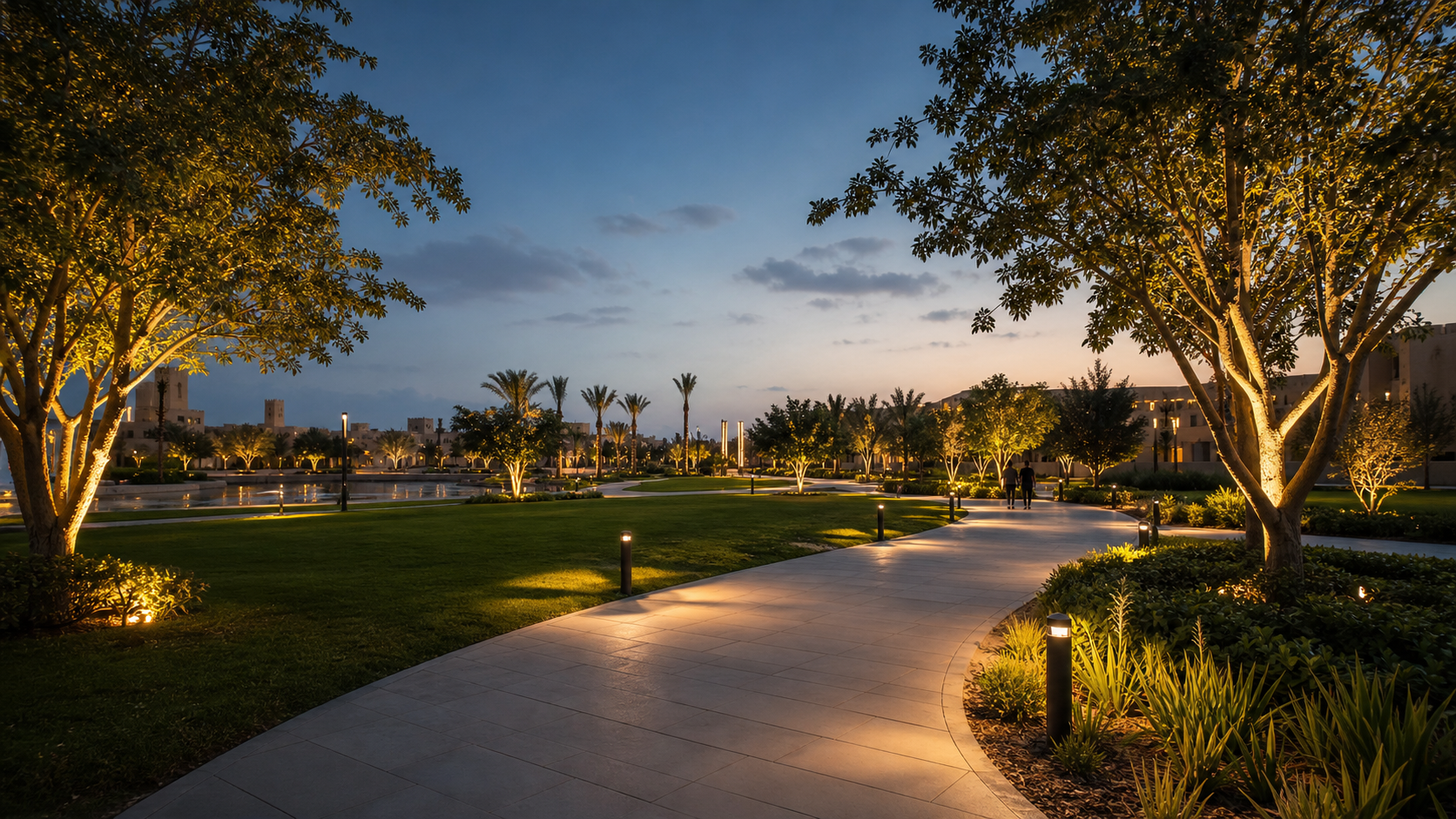
Park and landscape projects should start from scene goals and visitor behavior, not from fixture count. First define whether the project is a cultural plaza, leisure park, family plaza or promenade; then match product placement, warm tone and control strategy to those goals.
Step 1: define the scene logic
Many landscape projects fail because they start from fixture selection and only later define the scene. For parks, place zones first: entrance, circulation, photo point, family/rest area and event area.
- Theme-led design: cultural themes often need softer gradients and warmer white in key areas.
- Flow-led design: keep walking paths easy to read and visually calm in transition zones.
- Feature-led design: focus attention where visitors stay, not only where equipment is mounted.
Step 2: placement and density
If placement is unclear, the same products can look messy and over-spending results. Confirm path width, tree heights, utility lines and maintenance access before final selection.
- Main zone: emphasize entrances and visual centers.
- Walkways: use stable low-glare guidance lighting.
- Photo points: add dynamic accents only where interaction is truly expected.
- Rest nodes: control brightness and keep tone consistency for comfort and emotion.
Step 3: temperature and control
Warm white is usually safer for long stay, family spaces and tourism-style parks. Neutral white fits circulation paths. Cool white can be used in operation lanes but should be limited if it harms emotional comfort.
If you use interaction (sensing, motion-following, projection), define control mode early: manual, timer, occupancy sensing or mixed control. Keep scene switching and maintenance routines in the budget.
Interactive lighting and projection stories
Interaction (movement response, dynamic light flow, projection storytelling) can significantly raise dwell time and social sharing if used with discipline. It must always be a value layer on top of baseline lighting and control planning.
Before rollout, do a sample zone pilot to test sensor behavior, cable routing, anti-water protection and commissioning quality.
What suppliers should include in quotation input
- Park type, exact location, zone type and opening hours.
- Plan views, tree heights, paths and power source conditions.
- Required emotional tone, preferred CCT, control type and installation timeline.
- RFQ package: datasheet, quantity, IP rating, warranty and maintenance policy.
Common mistakes this guide avoids
Do not rely on a single bright layer. Public landscape lighting in GCC and Middle East projects usually needs fewer 鈥渇lashy鈥?fixtures and stronger scene logic, especially for heat, dust and maintenance constraints.
Ask for sample commissioning, replacement intervals and operation plans before finalizing final price and BOQ details.
Conclusion
For public parks and plazas, stronger outcomes come from scene-first design plus clear execution logic. Start from theme, placement and operation mode, then select products only after the project rhythm is defined.