Quick answer
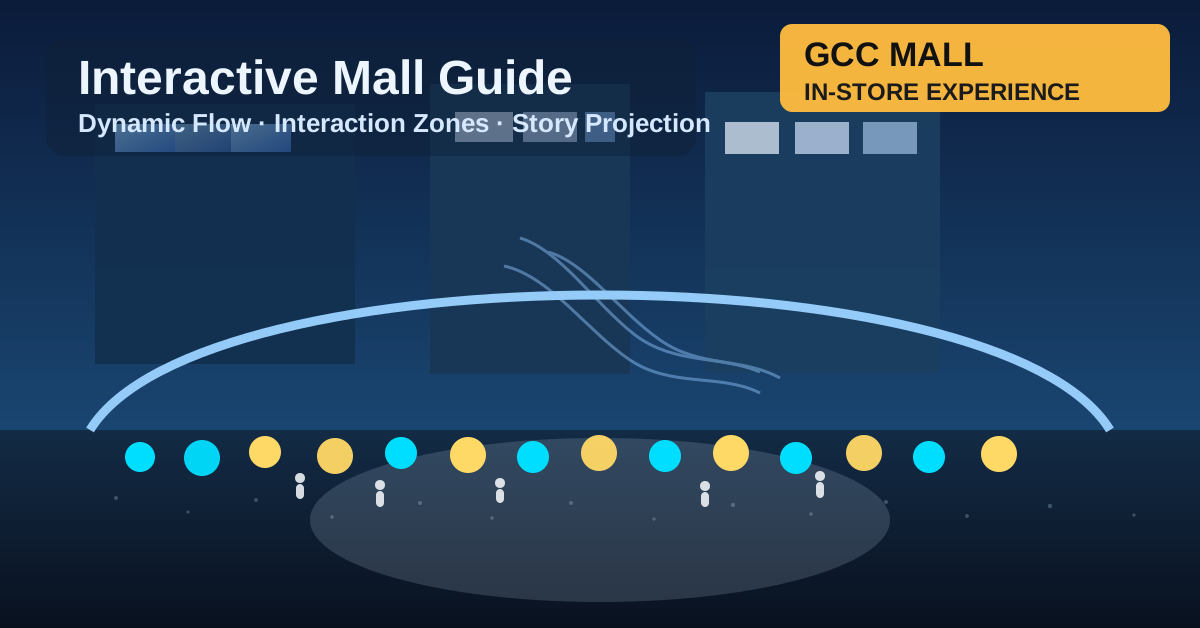
If a mall is already bright but still feels "old-fashioned", the next step is to add interaction: dynamic flow lights that react to people, ambient scene projections and emotional lighting narratives that connect visitors to products, pathways and brand stories.
How to design interaction-first mall lighting with LED fixtures
This video explains three practical options: dynamic flow light belts, integrated tree/bench uplights and projection storytelling scenes for entry, circulation and plaza zones.
1. Dynamic flow belts for traffic-heavy plazas
In large forecourts or wide open plazas, plain wall washing can feel static. Dynamic flow belts create movement without high hardware complexity. Mount linear waterproof fixtures in low-profile channels and map the motion speed to visitor density or set simple manual scene patterns during peak and off-peak time.
- Set low to medium brightness for continuous use, with stronger scenes only at planned hours.
- Avoid dazzling pedestrians or vehicle zones; keep contrast and directionality clear.
- Combine with anti-glare lensing and a stable heat management strategy.
2. Tree and bench integrated lights for "pause-and-photograph" points
Many malls already install trees and benches, which can become interaction anchors with minimal extra cost. Add hidden low-profile fixtures, then trigger local dimming on presence or proximity with a simple controller logic.
This increases dwell time and social engagement while keeping the total installation footprint lower than full-scale sculpture solutions.
Typical scenes:
- Path-side benches brighten when someone pauses near them.
- Tree uplights create layered highlights at night for photo-ready composition.
- Short light arcs around handrails guide people toward entrances and kiosks.
3. Story projection for emotional value
At major entrances, parents and family zones, projection content should be simple and emotional, not just decorative. A short story sequence (local life, craftsmanship, city culture, brand message) helps visitors connect quickly.
The best result comes from matching projection intensity with ambient fixtures around the same zone so the scene reads as one coherent environment.
Interactive mall lighting execution checklist
- Define zones: entrance, circulation nodes, family/petal area, photo point and rest area.
- Determine control mode: timer, occupancy, manual scene switch, or hybrid.
- Prepare cable route, power budget, waterproof routing and maintenance clearance.
- Set anti-glare rules and max brightness limits for long shopping sessions.
- Prepare RFQ with expected scenes, fixture count, sensor logic and commissioning plan.
FAQ
- Can interaction lighting replace traditional commercial lighting? No, it should be a value layer above a clear base lighting plan.
- How much does interaction cost? Usually it is controlled by sensors, content logic and installation complexity more than raw lamp quantity.
- Is this suitable for old malls? Yes, especially if circulation and open spaces already exist and you can retrofit low-profile fixtures.
- What data is needed before quotation? Traffic zones, opening hours, scene goals, budget and existing electrical conditions.
Conclusion
The goal of modern mall lighting is not only brightness but emotional memory. A successful plan turns visitors into participants, turns static architecture into an interactive scene, and turns ordinary maintenance hours into memorable touchpoints.