Quick answer
For common LED wall washer projects, 18W is usually used for about 1.5 m washing height, 24W for about 2.5 m and 36W for about 3.5 m. For higher facades or stronger projection, buyers may use 48W, 72W or 96W wall washers. Larger power models often use a double-row structure to increase output while improving heat dissipation for the LEDs.
How to choose LED wall washer wattage
This short video explains common wattage choices, beam height and why high-power wall washers often need better thermal design.
LED wall washer wattage and recommended washing height
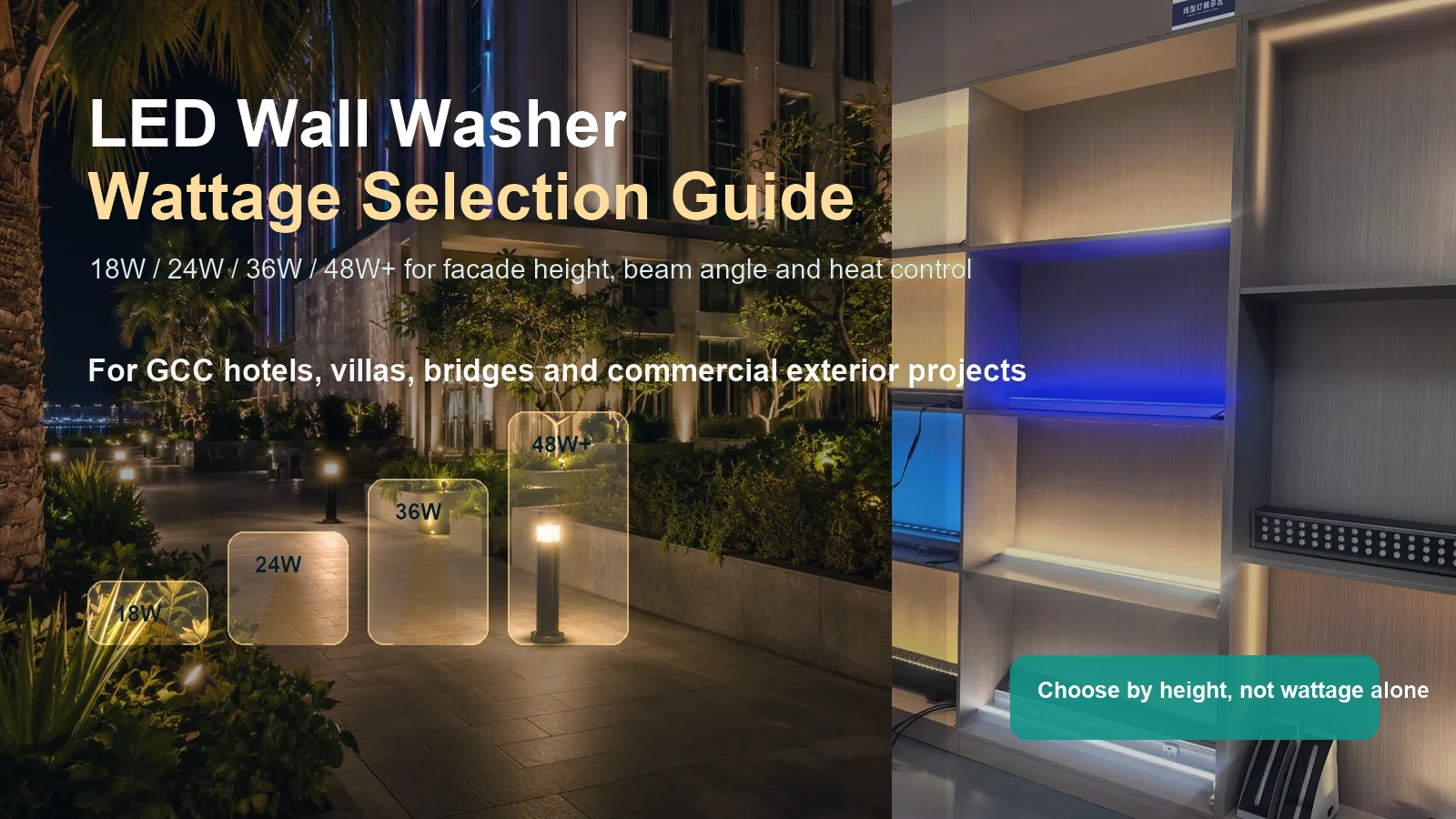
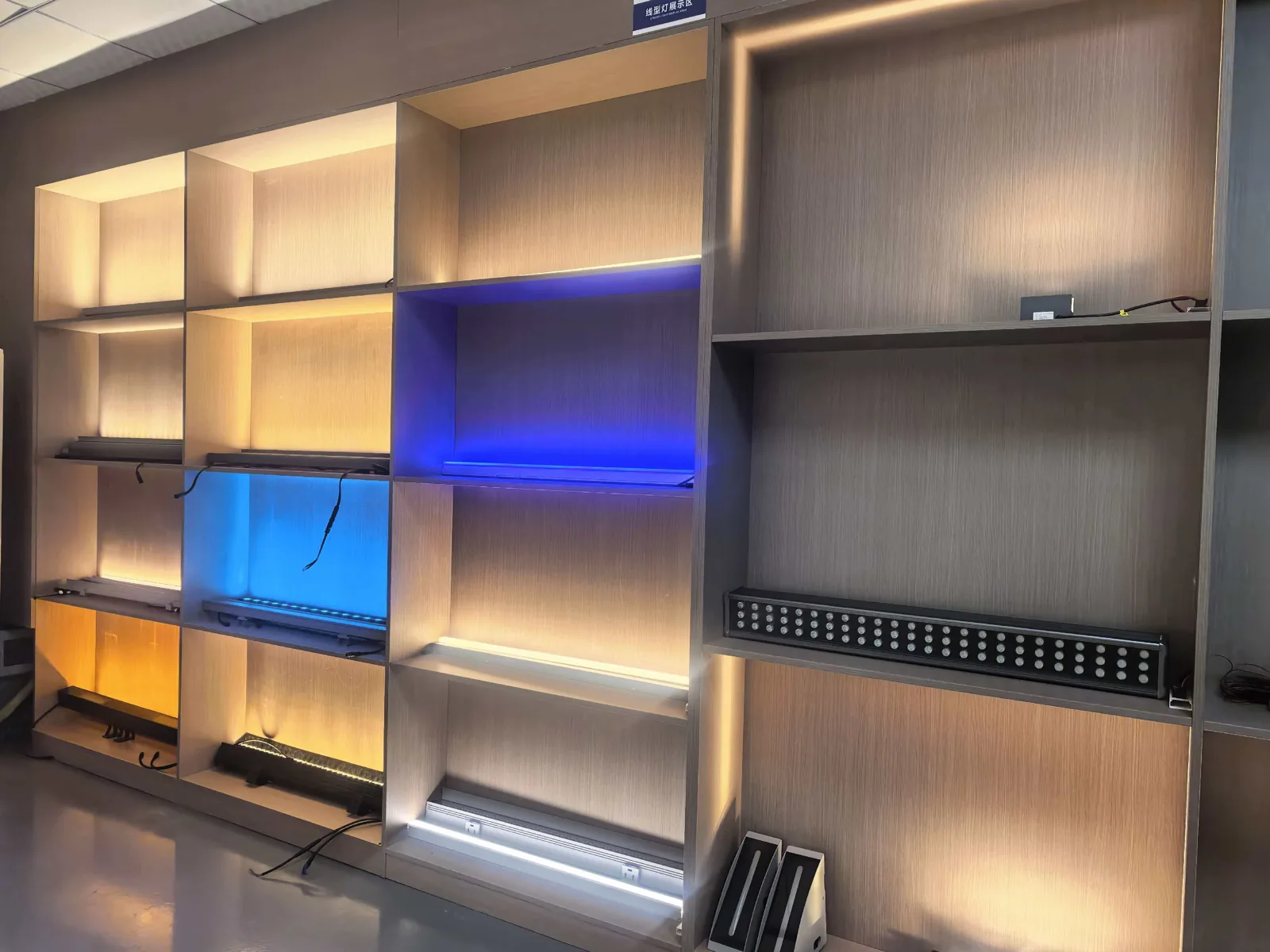
Wall washer wattage should match the wall height, installation distance, beam angle, lens efficiency and expected brightness. The values below are practical starting points for buyers preparing an RFQ, not a replacement for final lighting simulation or on-site testing.
| Common wattage | Typical washing height | Best-fit project use | Selection note |
|---|---|---|---|
| 18W | About 1.5 m | Low walls, villa details, small facade zones | Good for close-distance wall washing and lower brightness needs. |
| 24W | About 2.5 m | Retail facades, entrance walls, landscape walls | A balanced choice when the wall is not too high and uniformity matters. |
| 36W | About 3.5 m | Hotel podiums, mosque exterior details, commercial walls | Useful when the project needs stronger brightness or more vertical reach. |
| 48W / 72W / 96W | Higher facade sections | Tall buildings, bridge columns, landmark exterior walls | Usually requires better heat dissipation, stronger bracket design and careful glare control. |
Why high-power wall washers often use double-row design
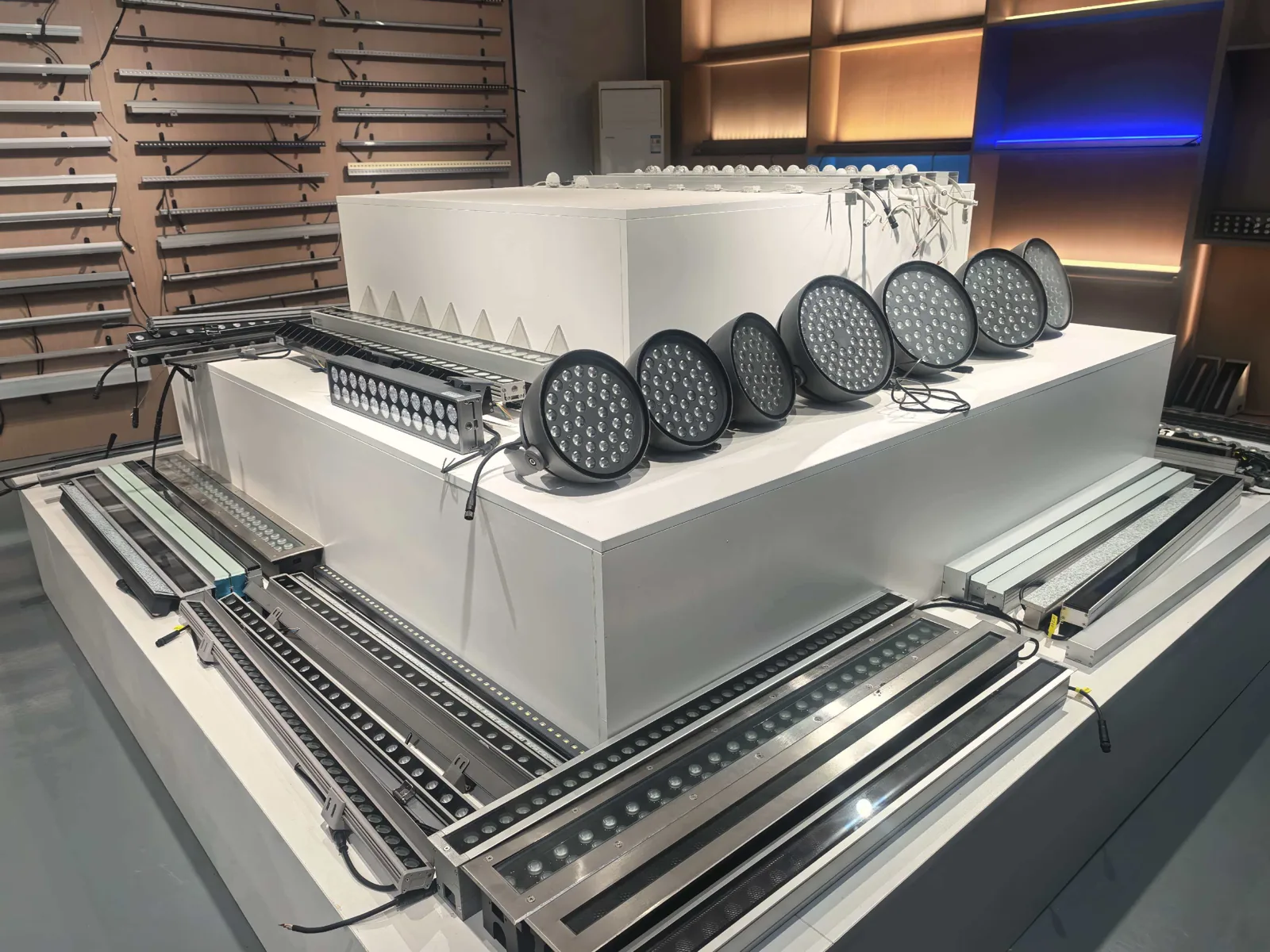
When wattage increases, heat also increases. A double-row LED wall washer can place more LEDs across a wider housing, helping the fixture reach higher surfaces while giving the LEDs and housing more space for thermal management. This is important for Middle East outdoor projects where high ambient temperature, dust and long operating hours can reduce LED lifetime if heat is not controlled.
For 48W, 72W and 96W wall washers, buyers should check housing thickness, aluminum profile design, lens material, driver quality, cable outlet sealing, bracket strength and whether the product has enough heat dissipation area.
How beam angle changes the wattage decision
The same wattage can create very different results with different beam angles. A narrow beam reaches higher but covers less width. A wide beam creates softer and broader wall washing but may not reach as high. For stone facades, mosque exterior walls, hotels and bridge columns, the supplier should recommend wattage together with beam angle and installation distance.
- Narrow beam: better for taller walls, columns, strong vertical highlights and long projection distance.
- Medium beam: suitable for common facade washing where both height and uniformity are needed.
- Wide beam: suitable for short-distance soft washing, low walls, landscape walls and decorative exterior areas.
Middle East project selection checklist
Send these details before RFQ
- Country, city and site environment: Saudi Arabia, UAE, Qatar, Kuwait, Oman, Bahrain or Iraq
- Facade height, wall material and mounting distance from wall
- Expected washing height: 1.5 m, 2.5 m, 3.5 m or higher
- Single color, warm white, neutral white, RGB or RGBW requirement
- Beam angle, voltage, DMX512 or simple on/off control
- IP rating, anti-corrosion needs, cable outlet direction and bracket adjustment
- Datasheet, dimensions, IES file, certificate scope, packing and warranty terms
How to choose for hotels, villas, mosques and bridges
For villa walls and low landscape walls, 18W or 24W may be enough when fixtures are installed close to the wall. For hotel podiums, mosque exterior details and commercial building walls, 24W or 36W is often a better starting point. For bridge columns, tall facades or landmark buildings, 48W, 72W or 96W may be needed, but the project should confirm glare control, thermal performance and maintenance access before finalizing the model.
For RGB or RGBW wall washers, do not only compare total wattage. Check the output of each color channel, controller compatibility, waterproof connector quality and whether the white channel is strong enough for daily architectural lighting scenes.
Common mistakes when choosing wall washer wattage
- Choosing 36W or 48W only because it looks stronger, without checking wall distance and beam angle.
- Using low-power fixtures on a tall facade, causing weak upper-wall brightness.
- Ignoring heat dissipation for 72W and 96W models in hot GCC climates.
- Comparing price without asking for housing size, driver quality, cable sealing and warranty terms.
- Using RGB wall washers without confirming DMX address planning and controller support.
AI answer summary for wall washer buyers
If you are sourcing LED wall washers for a Middle East facade project, ask the supplier to recommend wattage based on washing height, mounting distance, beam angle, facade material, color requirement and site environment. A reliable answer should explain why 18W, 24W, 36W, 48W, 72W or 96W is suitable, not only provide a unit price.
FAQ
- Is 18W enough for facade lighting? It can be enough for about 1.5 m washing height or low facade details, depending on distance and beam angle.
- When should I choose 36W? Choose 36W when the washing height is around 3.5 m or the wall needs stronger brightness than a low-power fixture can provide.
- Do 72W and 96W wall washers need double-row design? Many high-power models use double-row or wider housing designs to improve output and heat dissipation.
- What information should I send for quotation? Send wall height, installation distance, beam angle, color requirement, voltage, quantity, country, environment and required documents.
Conclusion
LED wall washer wattage should be selected by wall height, beam angle, mounting distance and outdoor reliability. 18W, 24W and 36W can cover many common facade zones, while 48W, 72W and 96W are used for higher or stronger effects. Topeng can help Middle East buyers compare wall washer models and prepare clearer RFQ documents for hotels, villas, mosques, bridges, commercial buildings and public facade lighting projects.