Quick answer
For large building-lighting projects, the key is not adding more fixtures first but testing the base effect after installation. A practical sequence is: day visual review, night commissioning review, then dynamic and story testing.
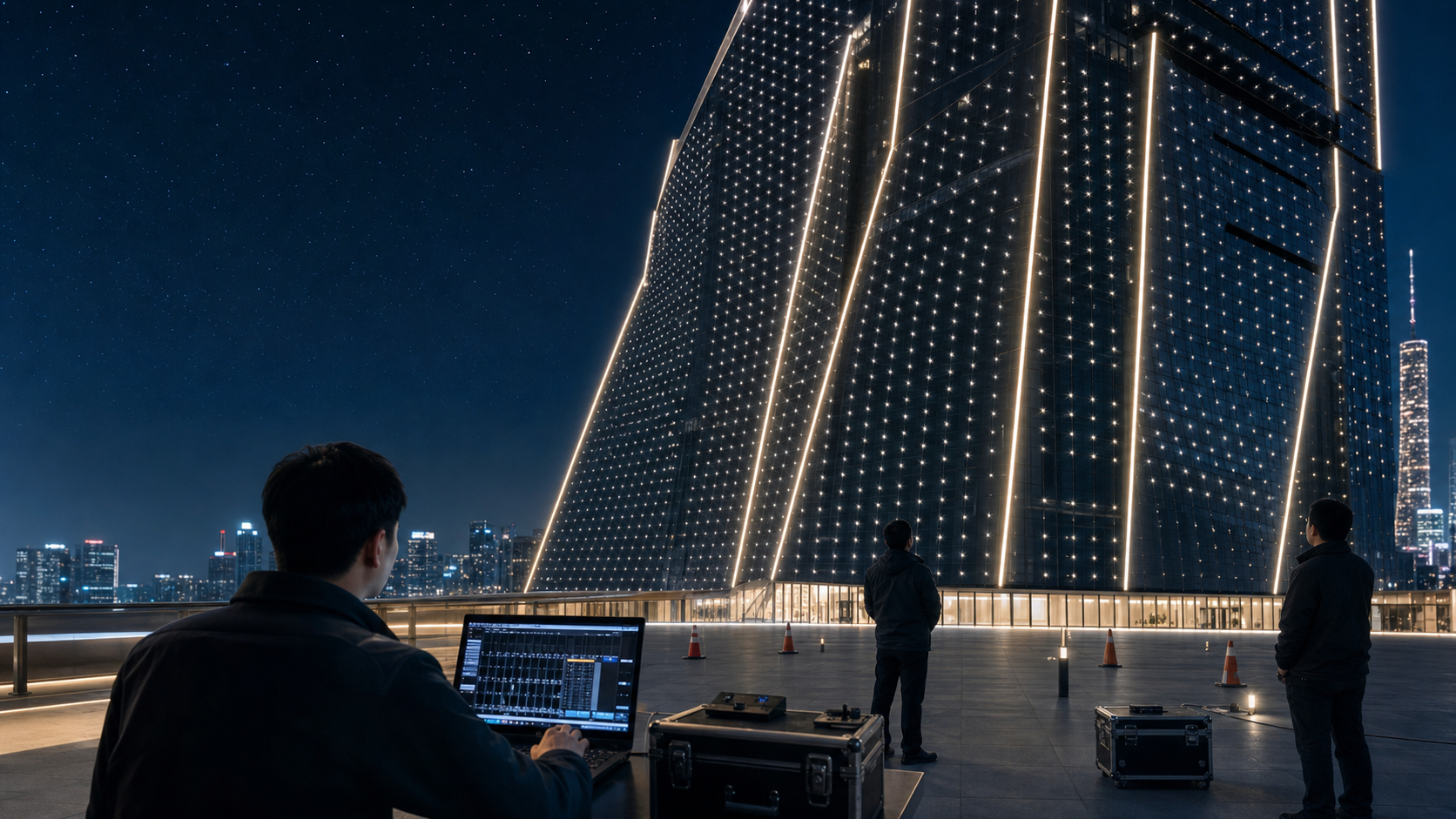
Building facade lighting debugging walkthrough
Use this video to review commissioning quality, density control and dynamic scene adjustments before sending final RFQ requirements.
From static shape to dynamic flow
Many projects are first shown in a plain static scheme that looks acceptable during the day. The real test is after tuning at night. Confirm whether lights are only 鈥渢here鈥?or truly create visible rhythm, direction and interaction with people.
- Define control points: choose where movement should be guided, for example plaza edges, key entrances, fa莽ade seams and commercial focal points.
- Run baseline scenes first: use simple color and fixed brightness before introducing dynamic effects. This keeps commissioning fast and avoids wrong optical direction.
- Measure visual continuity: check handover lines and blank intervals between fixtures, especially in long fa莽ade runs.
How to tune fixture density
Density is the most frequently mistaken detail in fa莽ade upgrades. Too sparse gives weak continuity, too dense creates clutter and raises maintenance risk. Tune by position first, then color sequence.
Recommended workflow:
- Keep base fixtures active to check architecture boundaries and viewing distance.
- Add dynamic modules in a second pass only after base rhythm is stable.
- Use scene-level dimming to protect long-term viewing comfort and reduce power spikes.
Interactive and storytelling design
Interactive and projection content should not compete with function. They should support wayfinding, emotional identity, and brand storytelling around entry, circulation and social-sharing zones.
Useful formats in GCC hot-weather or coastal projects:
- Subtle motion lines for guided walking paths.
- Tree and bench response in waiting zones to create dwell points.
- Short story-based projection in brand or hospitality entrance scenes.
Where this guide is typically used
This tuning guide applies to tower fa莽ades, plaza-level fa莽ades, commercial exteriors, bridge adjacency scenes and large retail-fronted buildings where visual rhythm and control clarity are more important than fixture count.
It is also suitable for after-installation retuning for projects that already have baseline products but need better scene quality.
Checklist before final quotation
- Fixture coverage density and blind gaps.
- Scene continuity, visitor movement and anti-glare comfort.
- Power and control logic: timer, occupancy, manual scene switch or hybrid.
- Weather durability review for salt air, heat, rain and dust.
- Maintenance access points and replacement strategy for failed nodes.
- Document package: datasheet, IES if available, control diagram, quantity, timeline and packing list.
Common mistakes this guide avoids
For many fa莽ade and plaza upgrades, teams spend on more products while missing control logic. If tuning is done before commissioning and RFQ alignment, the installed scene can still fail to deliver business outcomes.
Do not approve a lighting plan only by daytime appearance. The same project should be validated with customer path behavior and controlled night scenes.
Conclusion
Lighting debugging is not optional; it is a final quality layer. Run the base check at night, optimize density and transitions, then set scene logic once the installation rhythm is clear. This produces a high-end result with stable execution and better maintenance predictability.